What Clothes Did Vikings Wear 2026: Beginner-Friendly Guide
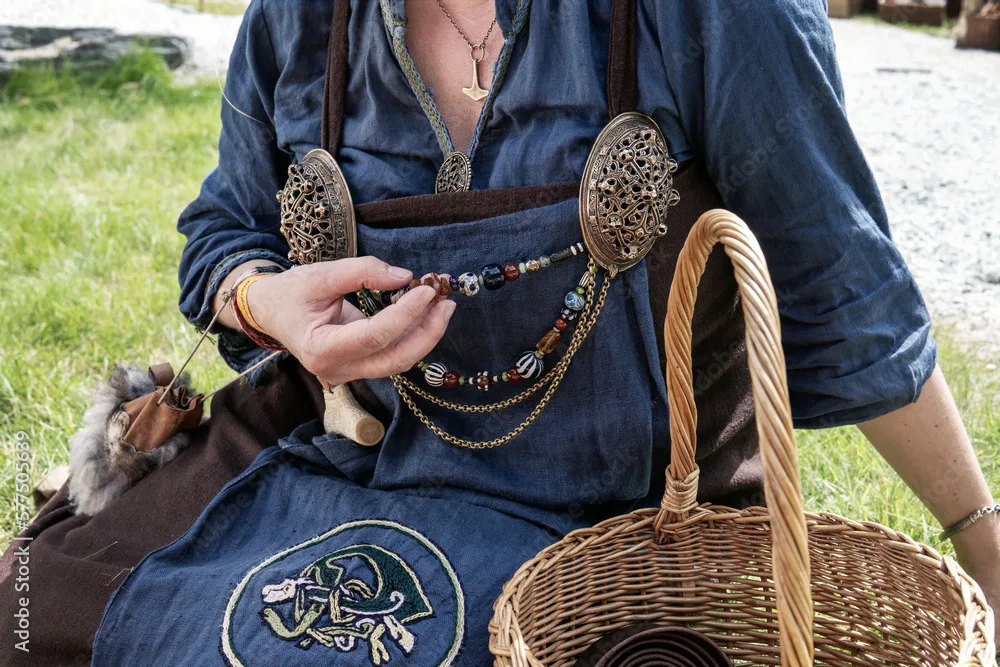
Image source: Bing (Web (fair-use with source credit))
When someone asks what clothes did Vikings wear, the answer is almost never the fur-shouldered, horned-helmet fantasy you've seen in movies. Real Viking clothing was a practical layering system built around wool, linen, and leather, designed to survive North Atlantic winters and look sharp while doing it.
Archaeological finds from graves at Birka in Sweden, Hedeby in northern Germany, and the Oseberg ship burial in Norway give us a detailed picture. Most surviving textile fragments date between 800 and 1050 CE, and they reveal a culture that cared deeply about fit, color, and visible status signals.
Quick Answer
Vikings wore layered wool and linen clothing. Men paired a knee-length tunic with wool trousers and leg wraps. Women wore a linen underdress with a wool apron dress suspended by paired oval brooches.
Both genders used leather turn-shoes and heavy wool cloaks. Clothing signaled social rank through fabric quality, imported silk, and metal brooches.
Why You Can't Understand Viking Clothes From Text Alone
Viking dress is a deeply visual topic. The way an apron dress hangs from two oval brooches, how leg wraps spiral up the calf, or how a cloak pin sits on the shoulder, these are spatial details that words only partially capture.
Archaeological textile fragments are small, often discolored, and hard to interpret without seeing them in context. The placement of brooches in a grave tells you how straps were arranged. The weave pattern in a scrap of wool tells you what kind of garment it came from.
You need diagrams, museum photos, and reconstruction photos to connect the dots.
That's why this article pairs descriptions with visual references. If you're planning a reenactment kit, writing historical fiction, or just curious what the real thing looked like, the images matter as much as the words.
The Core Layering System: How Viking Clothing Actually Worked
Vikings didn't wear single heavy garments. They layered, the same way you'd layer for a cold, wet day outdoors. The system had three tiers: a moisture-wicking linen base, an insulating wool middle, and a weather-resistant outer layer.
This approach worked brilliantly in Scandinavian climates. Wool retains heat even when damp. Linen wicks sweat away from the skin.
A wool cloak blocks wind and rain. Each layer could be added or removed depending on the season, the activity, and your social setting.
The Linen Underlayer (What Touched the Skin)
The base layer was always linen. Both men and women wore a linen underdress or undershirt called a serk. This sat against the skin and kept the scratchy wool outer layer from causing irritation.
Linen fragments are rare in the archaeological record because plant fibers decay faster than animal fibers. But where they survive, like at Hedeby harbor in northern Germany, they show plain-weave (tabby) linen with thread counts around 20 threads per centimeter. The fabric was light, breathable, and washable.
Women's linen underdresses were typically ankle-length with long sleeves. Men's linen under-trousers were worn beneath wool trousers in cold weather. Think of these as the Viking equivalent of your base layer on a hiking trip.
Not glamorous, but essential.
The Wool Middle Layer (The Main Event)
Wool was the backbone of Viking clothing. It was warm, durable, naturally moisture-resistant, and available locally. Most Viking wool was 2/1 twill, a diagonal weave that's flexible and sheds water better than plain weave.
The quality varied enormously by class. A free farmer might wear medium-weight wool with visible spinning imperfections. An elite jarl could afford finely woven wool with thread counts above 24 threads per centimeter, almost smooth to the touch.
Wool was typically left in its natural sheep color. White, brown, black, and grey were the most common. But Vikings also used plant-based dyes to achieve blue from woad, red from madder root, and yellow from weld flowers.
These colors showed up in clothing, though bright shades were expensive and signaled status.
The Outer Layer (Cloaks, Furs, and Weather Protection)
The outermost layer was a cloak or mantle, usually heavy wool or fur. The Old Norse word feldr describes a rectangular wool cloak, often around 150 by 200 centimeters, draped over one or both shoulders and fastened with a pin or brooch.
Cloak pins were typically penannular (ring-shaped with a gap for the pin) and made of bronze, silver, or iron depending on wealth. A single pin at the right shoulder was the most common fastening method, leaving the sword arm free.
For extreme cold, Vikings used fur. Squirrel fur (vair) was common for lining. Mink, bear, and fox were reserved for the elite.
The Skjoldehamn tunic, found in Arctic Norway and dating to around 1070 CE, was made almost entirely from fur and represents the extreme end of cold-weather adaptation.
Women's Viking Dress: The Apron Dress and Paired Brooches
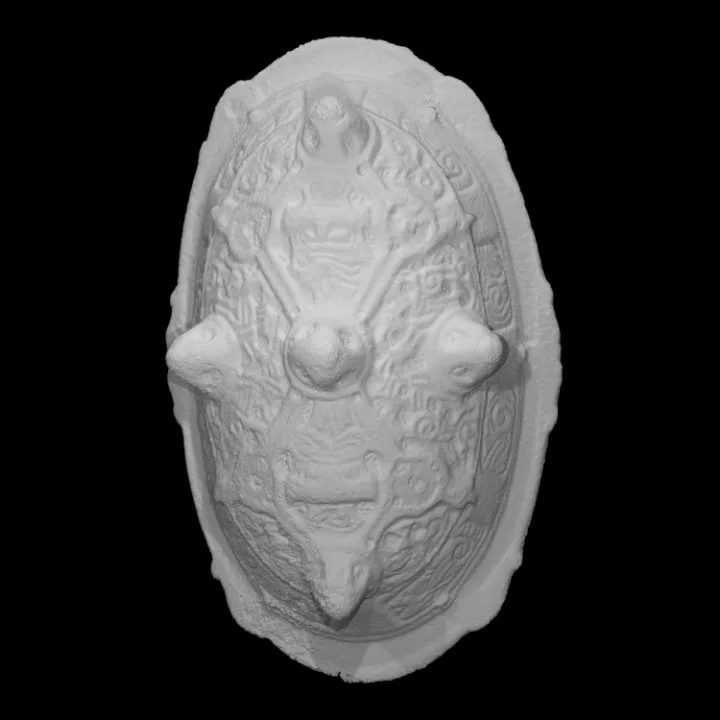
Image source: Bing (Web (fair-use with source credit))
Viking women's clothing is one of the most misunderstood aspects of Norse dress. The iconic garment is the apron dress, known in modern scholarship by the Old Norse terms smokkr, hangerok, or forkle. It wasn't an apron in the kitchen sense.
It was a full overdress worn over the linen underdress.
The Smokkr / Hangerok / Forkle
The apron dress was a sleeveless or short-sleeved garment that hung from two shoulder straps. These straps were attached to a pair of oval brooches at the collarbone area and extended down the front of the dress, often visible as decorative straps held in place by additional small brooches or pins.
The dress itself was typically wool, cut with triangular gores inserted at the sides to create flare. This gave it a full, A-line silhouette that moved well. The hem length varied, but most reconstructions place it at or near the ankle.
Archaeological evidence from Birka graves in Sweden shows that the apron dress was nearly universal among adult women in trading towns. The paired oval brooches are the single most diagnostic artifact of female Viking dress. When archaeologists find two oval brooches positioned at the shoulders in a female grave, they can confidently identify the burial as a woman wearing an apron dress.
Oval Brooches and Strap Arrangements
Oval brooches (called dobbelfibler in Danish) were cast in bronze or silver and typically measure 8 to 12 centimeters long. They came in plain, decorated, and ornate versions. The most elaborate feature intricate Borre or Jellinge style animal ornamentation.
Each brooch served a functional purpose. The woman's shoulder straps, usually made of woven textile or leather, hooked onto the brooch pins. From there, the straps ran down the front of the dress, often supporting a small pouch, knife, or sewing tools hung between the brooches.
The strap arrangement is one of the hardest things to get right in reconstructions. Many modern depictions show the straps running straight down. But grave evidence suggests the straps sometimes crossed behind the neck or were arranged in a Y-shape.
The exact arrangement varied by region and period.
Head Coverings and Married Women's Dress
Married women typically covered their head. The evidence points to a cloth headband, wimple, or wrapped headcloth. Unmarried women generally wore their hair uncovered, sometimes with a simple fillet or ribbon.
This marital distinction is visible in grave goods. Women buried with head coverings tend to be paired with more mature assemblages of jewelry. The head covering itself rarely survives, but metal fittings associated with headwear have been found at Birka and Kaupang in Norway.
Men's Viking Dress: Tunics, Trousers, and Leg Wraps
Image source: Bing (Web (fair-use with source credit))
Men's Viking clothing was simpler than women's but followed the same layering logic. The core outfit was a knee-length tunic, wool trousers, and leg wraps for insulation. Add a belt with a knife, a cloak, and leather shoes, and you've got the complete kit.
The Kyrtel (Tunic)
The men's tunic, called a kyrtel, was a pull-over garment reaching to mid-thigh or just above the knee. It had a round or slit neck opening, long sleeves, and was typically made of wool in 2/1 twill.
The tunic was cut from rectangular panels with gores inserted at the sides for ease of movement. This is a key detail. Vikings didn't use complex curved pattern pieces like modern tailors.
They worked with straight seams and triangular inserts to create shape from flat fabric.
Neck openings were small, just large enough to pull over the head. Some had a short slit at the front or back, closed with a simple tie or small brooch. The sleeves were straight and moderately wide, not the exaggerated bell sleeves you see in cheap costumes.
Tunic color and trim signaled status. A plain brown or grey tunic was everyday wear. A tunic dyed with woad blue or madder red, with tablet-woven trim at the neck and cuffs, marked someone with means.
Brók (Trousers)
Viking trousers were straight-legged and relatively loose. They were held up by a drawstring or leather belt threaded through the waist. There were no buttons, zippers, or modern fasteners.
The Old Norse word brók (plural brœkkr) is the direct ancestor of the English word "breeches." The trousers were typically wool, though linen under-trousers existed for cold weather.
One common misconception is that Vikings wore tight-fitting trousers. The archaeological evidence doesn't support this. The Skjoldehamn find includes loose wool trousers, and most grave evidence points to a relaxed fit that allowed movement for farming, rowing, and fighting.
Vindingar (Leg Wraps)
Leg wraps, called vindingar in Old Norse, were long strips of wool or linen wound spirally around the lower leg from ankle to knee. They provided insulation and support, similar to modern athletic bandaging.
The wraps were typically 5 to 8 centimeters wide and several meters long. They were wound in a figure-eight or simple spiral pattern and tucked in or tied at the top. Metal tags and small hooks found in graves may have been used to secure the wraps.
Leg wraps were practical. They kept snow out of your shoes, warmed your calves, and could be easily adjusted or replaced. They were worn by both men and women, though the evidence is stronger for men's graves.
Shoes, Belts, and the Hardware That Held It All Together
Image source: Bing (Web (fair-use with source credit))
The accessories matter as much as the garments. Viking shoes, belts, and brooches were functional, but they also communicated identity. A bronze belt buckle versus a silver one told you something about the person wearing it.
Turn-Shoes: The Viking Footwear Reality
Viking shoes were made using the turn-shoe method. A single piece of leather was cut to shape, with the edges turned upward to form the upper. The shoe was assembled inside-out with the seam facing outward, then turned right-side-out so the seam was hidden inside against the foot.
This construction method protected the stitching from wear and water. The sole was typically cow leather, while the upper was often goat or calf leather for flexibility. Shoes were laced with leather thongs threaded through holes punched along the edge.
Most Viking shoes were low-cut, reaching just above the ankle. The Coppergate excavations in York, England, uncovered dozens of shoe fragments showing this construction method in remarkable detail. The York finds date to the 9th and 10th centuries and represent one of the largest collections of Viking-era footwear anywhere.
Belts, Brooches, and Pins
Belts were leather, typically 2 to 4 centimeters wide, with bronze or iron buckles. They served a practical purpose: holding up trousers, carrying a knife, and supporting a pouch or small bag. Belt buckles varied from simple D-shaped rings to ornate openwork designs.
Brooches and pins fastened cloaks and secured garments. The main types include:
- Penannular brooches: Ring-shaped with a gap for the pin, used for cloaks
- Oval brooches: Paired, used exclusively by women for apron dress straps
- Trefoil brooches: Three-lobed, decorative, used by elite men and women
- Ring pins: Simple pins with a ring-shaped head, used for lighter fastenings
The metal type signaled wealth. Iron was common. Bronze was standard for most free people.
Silver was for the prosperous. Gold was for royalty and the highest elite.
What Viking Clothes Looked Like by Social Class
Not all Vikings dressed the same. Your social rank determined the quality of your fabric, the brightness of your dyes, and the metal in your brooches. The three main social tiers were thralls, karls, and jarls.
Thralls (Enslaved People)
Thralls wore the simplest clothing. Coarse, undyed wool in natural brown or grey. Garments were functional and patched repeatedly.
Thralls typically didn't own brooches or decorative items. Their shoes were the cheapest leather, often repaired multiple times.
Archaeological evidence for thrall clothing is sparse. Thrall graves are simpler, with fewer grave goods. What we know comes mainly from law codes that specified what thralls could and couldn't wear.
Karls (Free Commoners)
Karls made up the majority of the population. Farmers, traders, craftsmen, and warriors. Their clothing was practical but could include some decoration.
A karl might own one good tunic for feasts, dyed with woad or madder.
Women of karl status wore bronze oval brooches and simple wool apron dresses. Men wore wool tunics with basic bronze belt buckles. Both genders owned at least one cloak.
A karl's wardrobe was small but functional, with perhaps two or three sets of clothing total.
Jarls and the Elite
The elite wore imported silk, fine wool, and gold thread embroidery. Jarls and their families displayed wealth through clothing openly. Silver brooches, gold arm rings, and silk-trimmed cloaks were status markers.
The Mammen grave in Denmark contained some of the finest textile evidence of elite Viking dress. The burial, dating to around 970 CE, included fragments of gold-thread embroidery and what may have been silk imported from Byzantium. This level of luxury was reserved for the highest social tier.
Regional and Seasonal Differences You Should Know
Viking dress wasn't uniform across Scandinavia. Danish, Norwegian, and Swedish clothing had distinct features. Seasonal changes also affected what people wore day to day.
Danish vs. Norwegian vs. Swedish Dress
Danish Viking graves show more Frankish influence. Fitted garments, different brooch types, and Continental-style belt fittings appear more frequently in Danish finds. This makes sense given Denmark's proximity to the Frankish Empire and active trade routes.
Swedish dress, particularly from Birka, shows strong Eastern influence. Silks and silver from the Byzantine and Islamic worlds appear in wealthy graves. The Rus Vikings who traveled east through modern Russia brought back Eastern textiles and styles.
Norwegian dress was more conservative. Heavier wool, simpler decoration, and a stronger adherence to traditional forms. Norway's rugged terrain and relative isolation from Continental fashions may explain this.
Summer vs. Winter vs. Deep Cold
Summer meant lighter layers. A linen underdress and a single wool tunic might be enough. Cloaks were set aside on warm days.
Leg wraps might be lighter or omitted entirely in summer.
Winter demanded the full layering system. Linen base, wool overdress, heavy cloak, fur lining, leg wraps, and hood. The Skjoldehamn tunic from Arctic Norway represents the extreme end.
It was made almost entirely from fur, with a hood and heavy insulation for sub-zero conditions.
The Biggest Visual Mistakes People Make
Most popular depictions of Viking clothing are wrong. If you're building a kit, writing a story, or just want to be accurate, these are the errors to avoid.
Horned Helmets and Other Myths
No Viking ever wore a horned helmet in battle. This myth comes from 19th-century opera costumes. Real Viking helmets were simple iron caps, sometimes with a nose guard.
Some may not have worn helmets at all.
The horned helmet myth is so pervasive that it's become the default "Viking" image. But it has zero archaeological basis. Not a single horned helmet has ever been found in a Viking context.
The "Fur Biker" Problem
Mass-produced Viking costumes often look like a biker jacket crossed with a bear pelt. Excessive fur, leather straps everywhere, and oversized shoulder pieces. Real Viking clothing was tailored, layered, and mostly wool.
Fur existed but was used strategically. As lining, trim, or outerwear in extreme cold. Not as a full-body covering.
The "barbarian" look is a modern fantasy invention.
When Fantasy Costume Replaces History
Fantasy Viking dress borrows from multiple centuries and cultures. It mixes Celtic knots, medieval plate armor, and pure invention. Real Viking clothing was specific to a time, a place, and a social context.
If you want accuracy, stick to the archaeological evidence. Look at the Birka graves, the Oseberg textiles, and the Coppergate finds. These are your primary sources, not a movie costume designer's imagination.
How We Know What We Know: The Archaeological Evidence
Our understanding of Viking clothing comes from a handful of key sites. Textiles rarely survive, so every fragment matters. The evidence is fragmentary but consistent enough to build a reliable picture.
Key Textile Finds and Where They Were Found
The most important textile sites include:
| Site | Location | Key Finds |
|---|---|---|
| Birka | Sweden | Oval brooches, textile fragments from graves |
| Hedeby | Germany/Denmark | Harbor textiles, leather scraps |
| Oseberg | Norway | Ship burial textiles, tapestry fragments |
| Coppergate | England | Shoe fragments, leather scraps |
| Skjoldehamn | Norway | Fur tunic, Arctic clothing |
| Mammen | Denmark | Gold-thread embroidery, elite grave goods |
Each site tells a different part of the story. Birka gives us women's dress. Coppergate gives us footwear.
Oseberg gives us textile construction details. Together, they build a complete picture.
What Survives and What Doesn't
Wool survives better than linen in most soil conditions. Leather survives in waterlogged or very dry environments. Silk and other imports are extremely rare and usually found only in elite graves.
Metal objects survive best. Brooches, pins, buckles, and fittings are found in large numbers. These tell us about fastening methods, garment placement, and status display even when the fabric itself is gone.
The gaps are significant. We have almost no evidence of underwear as we'd define it. Socks and stockings are rare.
Children's clothing is poorly represented. Every new excavation has the potential to fill these gaps.
A Visual Reference Guide: What to Look For
When you look at a Viking clothing reconstruction or museum display, certain features tell you whether it's accurate or fantasy. Here's what to check.
Identifying Features by Garment Type
Women's apron dress: Look for paired oval brooches at the shoulders. The straps should be visible running down the front. The dress should have flare from side gores.
No zippers, no velcro, no modern fasteners.
Men's tunic: Knee-length or just above. Round or slit neck. Long sleeves.
Wool fabric in twill weave. No buttons. Belt at the waist, not the hips.
Cloak: Rectangular or semi-circular. Fastened at the right shoulder with a single pin. Heavy wool or fur.
No elaborate clasps or modern closures.
Shoes: Low-cut leather. Turn-shoe construction. Thong lacing.
No heels, no modern soles, no rubber.
Color Palette: What Dyes Were Actually Used
The authentic Viking color palette was limited but not dull. Here's what was available:
- Natural wool: White, brown, grey, black (from sheep's natural fleece colors)
- Woad: Blue, ranging from light to deep indigo depending on dye vat concentration
- Madder root: Red to orange-red, depending on mordant used
- Weld: Bright yellow, often combined with woad to make green
- Lichen purple: Rare and expensive, used for small accents
- Imported silk: Various colors from Byzantium and the Islamic world, for elites only
Bright, saturated colors were expensive. Most everyday clothing was in the natural wool range. A vivid red or blue tunic was a statement of wealth.
Frequently Asked Questions
Did Vikings really wear horned helmets?
No. Not a single horned helmet has ever been found in a Viking archaeological context. The myth comes from 19th-century Romantic artists and opera costume designers.
Real Viking helmets were simple iron caps, sometimes with a nose guard. Many Vikings probably fought without helmets at all.
What fabric did Vikings use most?
Wool was the dominant fabric by far. It was locally available, warm even when wet, and could be woven in various weights and weaves. Linen was used for under-layers but survives poorly in the archaeological record.
Silk and other imports were reserved for the elite.
How did Viking women fasten their dresses?
The primary fastening method was a pair of oval brooches worn at the shoulders. Shoulder straps connected to these brooches and ran down the front of the apron dress. Additional small brooches, pins, or textile ties could secure the straps along the dress front.
Did Vikings wear leather jackets?
No. Leather was used for shoes, belts, and some pouches, but not as a primary garment material. The "leather biker" Viking look is entirely modern fantasy.
Real Viking clothing was overwhelmingly wool and linen.
Were Viking clothes colorful?
Yes, but within limits. Natural wool colors (brown, grey, white, black) were most common. Plant-based dyes produced blue from woad, red from madder, and yellow from weld.
Bright, saturated colors were expensive and signaled higher social status.
How do we know what Vikings wore?
Most evidence comes from archaeological grave finds. Textiles survive in fragments, often preserved by contact with metal objects like brooches. Key sites include Birka in Sweden, Hedeby on the Danish border, Oseberg in Norway, and Coppergate in York, England.