What Is Pilling on Clothing & How to Prevent It: Quick Guide
You pull on your favorite sweater and notice tiny balls of fuzz all over the chest and sleeves. It looks years older than it should, and you're left wondering what went wrong. What is pilling on clothing & how to prevent it is one of those questions that sounds simple but actually depends on what your clothes are made of, how you wash them, and even how you store them.
The good news is that pilling is normal, it's fixable, and with the right habits you can dramatically slow it down. Standard textile testing methods like ASTM D3512 and ISO 12945 measure exactly how prone a fabric is to pilling by simulating wear cycles in controlled conditions, which helps manufacturers rate durability before a garment ever hits a store shelf. As of 2026, most pill-related complaints trace back to a mismatch between fabric type and care routine, not some unavoidable flaw.
Let's break down what's actually happening on the surface of your clothes and what you can do about it.
Quick Answer
Pilling is the formation of small fiber balls on a garment's surface caused by friction and wear. It happens when loose fibers tangle and roll into tiny knots during washing, drying, or regular use. You can prevent it by washing clothes inside out on cold gentle cycles, avoiding fabric softener on synthetic blends, buying tightly woven fabrics with long-staple fibers, and removing pills with a fabric shaver before they worsen.
What Is Pilling on Clothing — and Why Does It Happen?
Pilling is the small balls or tufts of fiber that form on the surface of fabric after friction and wear. It's not a defect in most cases. It's a natural result of how fibers behave once they start loosening from the yarn structure.
Every piece of clothing is made of individual fibers twisted or woven together. When you wear, wash, or rub against a garment, some of those fibers work themselves free. Instead of falling off completely, the loose ends tangle together.
Friction rolls them into the tiny balls you see on your sleeves or chest area. That process is pilling.
It's easy to confuse pilling with lint or pet hair, but they're different. Lint comes off other fabrics in the wash and sticks on top of your clothes. Pet hair sits on the surface.
Pills are made of the garment's own fibers, knotted right into the fabric.
The ASTM D3512 standard uses a random tumble pilling test to simulate this process. A fabric sample gets tumbled in a chamber with a cork-lined interior for a set number of cycles. Technicians then compare the result against a standardized photographic scale to rate pilling severity from 5 (no pilling) to 1 (severe pilling).
That's essentially what happens inside your washing machine and dryer, just in slow motion over weeks and months.
Pilling tends to show up first in high-friction zones. Think underarm areas, the inner thighs of pants, where a bag strap rubs your shoulder, and the sides of couch cushions. If a specific area is piling faster than the rest, friction is usually the reason, not a fabric defect.
The Real Reason Your Favorite Sweater Looks Worn Out
Your sweater hasn't aged badly. It's been losing a quiet battle against every surface it touches. Here's what's actually going on beneath those little fuzz balls.
Three things drive pilling: fiber type, yarn construction, and mechanical stress. They all interact. A loosely twisted acrylic yarn in a brushed knit will pill like crazy even with gentle use, while a tightly woven long-staple cotton barely notices daily wear.
Fiber length matters enormously. Cotton and wool come in staple lengths. Shorter fibers (under about one inch) have more exposed ends in any given yarn strand.
Those endpoints pull free faster. Long-staple or extra-long-staple varieties like Egyptian cotton or merino wool have fewer loose ends per yard of yarn, so they pill far less.
Synthetic fibers such as polyester and nylon introduce a different problem. They're often stronger than the natural fibers they're blended with. When a loose polyester fiber knots into a pill and a cotton fiber breaks away, the pill stays anchored to the fabric longer.
That's why a 60/40 cotton-polyester t-shirt often pills worse than a 100% cotton one, even though polyester on its own is quite pill-resistant in filament form.
Yarn twist is the other hidden factor. Imagine two ropes. One is loosely spiraled, the other is wound tight.
The loose rope frays at the edge. Same principle. Higher twist per inch locks fibers in place and resists the initial shedding that leads to pilling.
Brushing and napping processes (used to create that soft, fuzzy surface on fleece and some sweaters) deliberately pull fiber ends to the surface. It feels amazing on day one, but it essentially pre-loads the fabric with the exact loose ends that become pills. That's why pill-prone garments are often the softest ones in your closet.
How Fabric Type Changes Everything: Natural vs. Synthetic Fibers
Not all fabrics are created equal when it comes to pilling. The fiber itself is often the single biggest variable. Here is how the most common ones behave.
Natural fibers
- Cotton: Pills, but weakly. Cotton fibers are relatively short and the pills usually fall off on their own before they get unsightly. Long-staple varieties (Pima, Egyptian) pill noticeably less than short-staple commodity cotton.
- Wool: A pilling staple, especially softer, finer types like merino and cashmere. The scaled fiber surface catches and tangles easily. On the plus side, wool pills often work themselves free after a few wears.
- Cashmere: The most notorious natural fiber for pilling. It's made from ultra-fine undercoat fibers that are inherently short. First-few-washes shedding is normal and doesn't mean the garment is low quality.
- Silk: Pills minimally in weave form but can show surface fuzz in knits. Silk filament is long and smooth, which naturally resists tangling.
- Linen: Rarely pills because the flax fibers are long, stiff, and smooth. That's one reason linen ages so gracefully.
Synthetic fibers
- Polyester: As a staple fiber in blends, it causes persistent pills. As a continuous filament, it resists pilling extremely well. Construction matters more than the fiber itself.
- Nylon: Strong and abrasion-resistant. Rarely pills on its own but can anchor pills in a blend.
- Acrylic: The worst offender for pilling. It's a short, weak synthetic staple fiber that tangles fast and holds on tight. Acrylic sweaters and blankets are infamous for this.
- Rayon/Viscose/Modal: Regenerated cellulose fibers that are weaker when wet and prone to fuzzing and pilling, especially in brushed or napped finishes.
Blends are where things get tricky. A cotton-polyester or wool-acrylic blend often pills more than either fiber alone. The weaker fiber sheds and the stronger one holds the pill in place.
It's a double penalty.
When you're shopping, here's a quick cheat sheet:
| Fabric | Pilling Tendency | Why |
|---|---|---|
| 100% Pima/Egyptian cotton | Low | Long staple, strong fiber |
| Commodity cotton | Moderate | Shorter fibers pill faster |
| Merino wool | Moderate | Fine fibers shed but release |
| Cashmere | High | Ultra-fine, short fibers |
| Acrylic | Very High | Weak staple fiber, strong pills |
| Polyester (filament) | Low | Continuous fiber, no loose ends |
| Cotton-polyester blend | High | Weak fibers shed, synthetics hold pills |
| Linen | Very Low | Long, stiff, smooth fibers |
Which Fabrics Pill the Most (and Which Ones Don't)
If you're trying to minimize pilling through your next purchase, fabric construction tells you more than the fiber label alone.
Highest pilling risk
- Brushed fleece (polyester or cotton)
- Low-cost acrylic sweaters and blankets
- Loosely knitted open-weave garments
- Cotton-polyester jersey t-shirts
- Napped flannel
- Cashmere blends with synthetic content
Lowest pilling risk
- Tightly woven poplin or twill cotton
- Long linen garments
- Silk charmeuse or crepe
- 100% polyester athletic wear (filament construction)
- Denim (tight weave, durable yarns)
- Outerwear shells with tight technical weaves
Knit fabrics pill more than woven fabrics almost across the board. Knits have more surface area exposed to friction and more flexibility for fibers to pull free. A tightly knitted pique polo resists pilling better than a loosely knitted jersey tee, even if they're both 100% cotton.
Thread density matters. Higher GSM (grams per square meter) fabrics and higher thread count weaves generally resist pilling because there's simply more material holding each fiber in place. That's why thin, lightweight cheap t-shirts look terrible after a month, while a thicker premium tee holds up for years.
One more thing worth mentioning: enzyme wash or bio-polishing is a finishing treatment some manufacturers apply to cellulosic fabrics (cotton, rayon, linen). It uses cellulase enzymes to dissolve loose fiber ends before the garment ships. It adds cost upfront but noticeably reduces first-wash pilling.
European brands like Uniqlo have used this treatment across their knit lines, and aggregate reviews consistently report less initial pilling on those treated garments.
How Washing and Drying Habits Speed Up or Slow Down Pilling
Your laundry routine is probably the single biggest lever you can pull. Most of the pilling on your clothes happens in the machine, not on your body.
Agitation is the enemy. Every time fabric tumbles against fabric or against the drum, fibers get pulled, bent, and loosened. A standard cotton wash cycle runs rough.
A delicate or gentle cycle cuts the agitation time and spin speed significantly, and that directly reduces fiber damage per wash.
Hot water weakens natural fibers. Cotton and wool lose tensile strength at higher temperatures. Weaker fibers snap and shed faster.
Washing at 30°C (86°F) instead of 40°C (104°F) or above materially reduces the rate of fiber breakage over the life of a garment.
Fabric softener sounds helpful but often makes pilling worse. Most liquid softeners work by coating fibers with a cationic surfactant layer that reduces static and adds slip. That coating weakens the fiber-to-fiber friction that holds loose ends in place, encouraging them to stand up and tangle.
Skip softener on anything that tends to pill. White vinegar in the rinse cup gives you some anti-static and softening benefit without the residue problem.
Overloading the washer is another common mistake. Clothes need room to move. A packed drum forces everything into constant tight contact.
More friction, more pilling, uneven washing, and poor rinsing all at once.
Drying is the other half of the problem. Tumble drying at high heat blasts fibers with hot air and mechanical tumbling simultaneously. It weakens them through heat stress and agitation at the exact same time.
Line drying or flat drying removes the agitation component entirely. If you must machine dry, use the lowest heat setting and remove items slightly damp rather than running them to complete dryness.
Detergent type plays a smaller role, but powder detergents with cellulase enzymes can actually help reduce surface fuzz on cotton over time. Liquid detergents are gentler on protein fibers like wool and silk. The key is simply using the right amount.
Too much detergent leaves residue that stiffens fabric and breaks down fiber finishes. Too little leaves soil that increases friction between fibers during the wash.
Pretreating stains by rubbing one section of fabric against another is a sneaky pilling trigger too. That localized abrasion can start a pill cluster in exactly the spot you scrubbed. Dab stains instead of rubbing them against the rest of the garment.
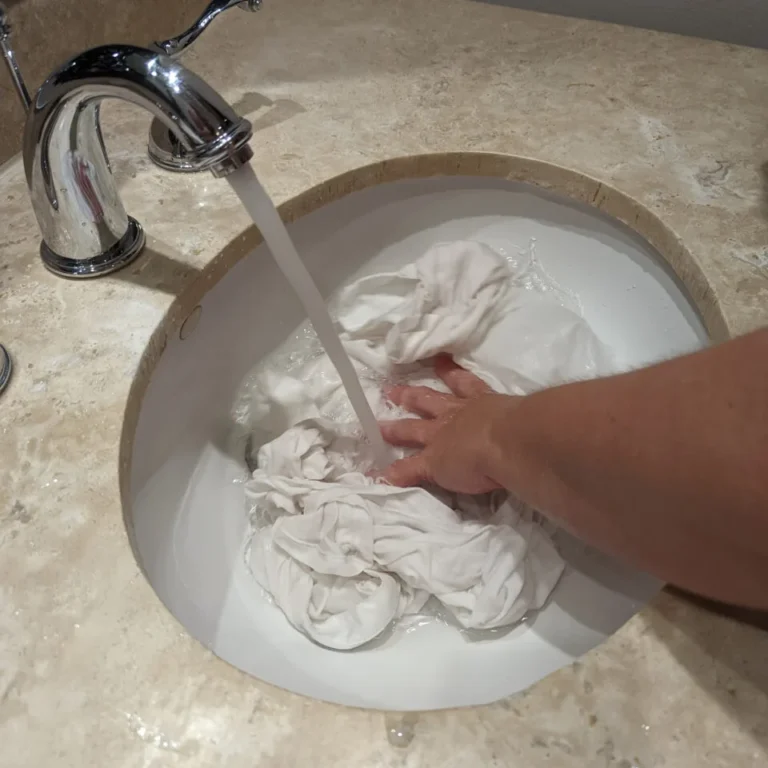
Step-by-Step: How to Wash Clothes to Prevent Pilling
Image source: Bing (Web (fair-use with source credit))
A few small changes to your laundry routine can cut pilling dramatically. Here's the process that works across most fabric types.
1. Turn garments inside out. This is the single easiest win. The outer surface of your clothes takes the most friction in the wash.
Flipping them inside out puts the decorative face against itself instead of scraping against the drum and other garments.
2. Use a mesh laundry bag for knits and delicates. A zippered mesh bag adds a physical barrier between your sweater and everything else in the load. It also prevents stretching and snagging.
Put one high-risk item per bag rather than cramming several in together.
3. Select the delicate or gentle cycle. This reduces agitation time and spin speed. Less mechanical stress means fewer fibers get pulled loose per wash.
If your machine has a "hand wash" or "wool" cycle, use it for anything you know pills easily.
4. Wash in cold water. Stick to 30°C (86°F) or below. Cold water preserves fiber strength and minimizes the thermal stress that weakens cotton and wool.
It also saves energy, which is a nice bonus.
5. Use liquid detergent, measured carefully. Powder detergent can be slightly abrasive on delicate fibers. Liquid dissolves more evenly and rinses cleaner.
Use the amount recommended for your load size. Extra detergent doesn't clean better. It just leaves residue.
6. Skip fabric softener on pill-prone items. As mentioned earlier, softener coatings loosen fibers and encourage tangling. If you want softening, add half a cup of white vinegar to the rinse cycle instead.
7. Reduce load size. Clothes need room to move freely. A half-full drum washes more gently and more effectively than a packed one.
If you're washing a few delicate items, wait until you have a small full load rather than running a half-empty cycle.
8. Air dry or flat dry whenever possible. Hang drying on a rack or clothesline eliminates the tumble-dryer agitation entirely. For knits that can stretch, lay them flat on a drying rack.
If you must machine dry, use the lowest heat setting and take things out while they're still slightly damp.
Following all eight steps is probably overkill for a sturdy cotton t-shirt. But for anything you care about, like a merino sweater or a good pair of leggings, this routine will noticeably extend the pill-free life of the garment.
The Right Way to Remove Pills Without Damaging Your Clothes
Once pills have formed, you need to remove them carefully. The wrong method thins the fabric and can create new pills faster than the originals.
Fabric shavers (electric defuzzers) are the most effective and safest tool for most garments. They use a rotating blade behind a protective guard that cuts pills off at the surface without grabbing the underlying fabric. Run the shaver in slow, light passes across the pilled area.
Don't press hard. Let the blade do the work. One or two passes is usually enough.
Going over the same spot repeatedly thins the fabric.
Sweater stones or pumice blocks work well on heavier knits like wool and cashmere. You gently rub the stone across the surface and it catches and breaks off the pills. It takes more effort than an electric shaver but gives you more control.
It's a good option for delicate items where you're nervous about using a powered tool.
Velcro lint rollers with a rough side can grab surface pills on loosely knitted fabrics. They're less precise than a shaver but work in a pinch for light fuzzing on things like fleece jackets or blankets.
What not to do:
- Don't pull pills off by hand. You'll stretch the surrounding knit and pull out fibers that weren't ready to shed, creating new pills.
- Don't use a razor blade directly on fabric. It's too easy to nick the garment or cut too deep.
- Don't use regular sticky lint rollers for pilling. They're designed for surface lint, not knotted fiber balls. They won't grab pills effectively.
After removing pills, give the garment a gentle shake and a quick once-over with a lint roller to catch any loose fragments. Then store it properly so the surface stays smooth longer.
Fabric Shavers, Sweater Stones, and Other Removal Tools Compared
Not every tool works for every fabric. Here's a quick breakdown of what to reach for and when.
| Tool | Best For | Caution |
|---|---|---|
| Electric fabric shaver | Most knits, fleece, cotton blends, sweaters | Use light pressure. Avoid on very loose weaves or lace. |
| Sweater stone / pumice | Wool, cashmere, heavier knits | Too abrasive for thin or delicate fabrics. |
| Velcro lint roller | Light fuzzing on fleece, blankets | Won't remove firmly anchored pills. |
| Manual fabric comb | Tightly knitted wool, structured knits | Can snag if used on loose knits. |
| Sticky lint roller | Surface lint only (not pilling) | Ineffective on true pills. |
Electric shavers are the most versatile option and the one most people should start with. They're widely available, inexpensive, and work on the broadest range of fabrics. Look for one with an adjustable guard height if you plan to use it on both thick sweaters and thinner tees.
Sweater stones are a niche tool but beloved by people who own a lot of cashmere and fine wool. They require more patience but give you excellent control. If you've invested in high-end natural fiber garments, it's worth having one in your kit.
What to Look for When Buying Clothes That Resist Pilling
You can't control how a garment is made, but you can read the signs before you buy. A few seconds of inspection at the store saves months of frustration at home.
Check the fiber content label. Long-staple cotton, linen, silk filament, and 100% polyester filament are your safest bets. Short-staple cotton, acrylic, rayon, and most blends are higher risk. If the label says "60% cotton, 40% polyester," expect some pilling over time.
Feel the fabric density. Hold the garment up to the light. If you can see through it easily, the weave or knit is loose and more likely to pill. Denser fabrics with less visible light passing through tend to hold up better.
Look at the yarn construction. Tightly twisted, smooth yarns pill less than fuzzy, loosely twisted ones. If the fabric already feels fuzzy in the store, it's going to pill. That soft brushed finish feels great on day one but it's essentially pre-pilled.
Read the care label for fabric treatments. Some garments are labeled as "anti-pilling" or "pre-shrunk with enzyme wash." These finishes reduce initial surface fuzz. They don't make a garment pill-proof, but they help.
Consider the knit type. Tighter knits like jersey and interlock pill less than loose knits like fisherman's rib or chunky cable. For woven fabrics, twill and plain weave outperform satin weaves in pilling resistance because the fiber intersections are more frequent and more secure.
Price isn't always a reliable indicator. Some expensive cashmere pills heavily because the fibers are so fine. Some affordable polyester athletic wear barely pills at all because the filament construction is inherently resistant.
Fiber type and construction matter more than the number on the tag.
Common Mistakes That Make Pilling Worse
Even people who know about pilling sometimes make these errors. They're easy to avoid once you know what to watch for.
Washing too often. Every wash cycle introduces friction. If you wore a sweater for two hours and it doesn't smell, hang it up and wear it again before washing. Spot-clean small marks instead of running a full cycle.
Most people over-wash their clothes by a wide margin.
Using hot water and heavy-duty cycles. Reserve hot water and standard cycles for towels, bedding, and work clothes. Everything else benefits from cold water and gentle agitation.
Ignoring the care label. That "dry only" or "hand wash only" tag isn't a suggestion. Dry cleaning or hand washing uses far less agitation than a machine. If a garment is labeled for gentle treatment, the manufacturer knows the fabric can't handle a standard wash.
Rubbing stains aggressively. Scrubbing a stain by rubbing the fabric against itself creates localized friction that starts pilling right where you're working. Blot stains with a clean cloth instead.
Storing knits on hangers. Heavy knits stretch on hangers, and the stretched areas pill faster because the fibers are under tension. Fold sweaters and knits instead. Hang only structured jackets and woven shirts.
Overloading the dryer. A packed dryer has the same problem as a packed washer. Fabrics tumble against each other constantly with no room to move. Dry smaller loads on low heat.
Using fabric softener on synthetics. This is one of the most common mistakes. Softener residue on polyester and nylon encourages fiber migration and tangling. If you use softener at all, keep it away from anything synthetic.
How to Store Clothes to Keep Them Pilling-Free Longer
Proper storage does more than keep your closet neat. It directly affects how fast pills develop on garments that aren't currently being worn.
Fold knits instead of hanging them. Gravity pulls on a hanging sweater and stretches the shoulders and lower hem. Stretched fabric pills faster because the fibers are under constant tension. Stack folded knits on shelves or in drawers with enough room that they aren't compressed under heavy items.
Give garments breathing room. Crowded closets create friction every time you pull something out. If your clothes are packed shoulder to shoulder, the rubbing alone can generate surface fuzz over time. Leave a little space between items, especially for things like fleece jackets and knit cardigans.
Use breathable garment bags for off-season storage. Plastic bins and vacuum-seal bags trap moisture and can create a slightly abrasive environment if the fabric shifts during storage. Cotton garment bags or acid-free tissue paper let air circulate while protecting against dust and moths.
Store clothes clean. Body oils, perfumes, and food residue left on fabric attract moths and can degrade fiber finishes over months in storage. A quick wash before packing things away for the season keeps everything in better shape.
Keep storage areas dry and cool. High humidity weakens natural fibers over time, and heat accelerates the breakdown of some synthetic fiber treatments. A closet inside your living space is better than an attic, garage, or damp basement for long-term storage.
When Pilling Means a Defect vs. Normal Wear
Pilling on a brand-new garment doesn't always mean poor quality, but sometimes it does. Here's how to tell the difference.
Normal pilling develops gradually over several washes and wears. It shows up in friction zones first. The pills are small and fairly evenly distributed.
The fabric underneath still feels intact and the garment's shape hasn't changed. This is just normal fiber shedding.
Defect-level pilling appears after one or two gentle washes and covers large areas that don't see much friction. If a sweater pills heavily across the back (where almost no rubbing occurs), the yarn twist or fiber blend is probably at fault. If pills are accompanied by thinning fabric, holes, or significant shape distortion, the garment was likely constructed with substandard materials or processes.
Some brands have generous return policies that cover premature pilling, especially for premium natural fiber products. It's worth checking the warranty. A reputable manufacturer will often replace or refund a garment that pills heavily within the first few weeks of normal use.
You also have consumer rights to consider. Under the FTC Textile Fiber Products Identification Act, garments sold in the US must have accurate fiber content labels and country of origin information. If a garment labeled "100% cashmere" pills so badly it's clearly a synthetic blend, that's a labeling violation, not a care issue.
The ISO 12945-2 standard rates fabrics on a 1 to 5 pilling scale after a specified number of rub cycles. Manufacturers who test to this standard will sometimes include pilling grade information in their technical specifications. A grade of 4 or 5 means excellent resistance.
A grade of 2 or below suggests the fabric will show visible pilling relatively quickly under normal use.
FAQs
Is pilling a sign of poor quality clothing?
Not always. Even high-quality cashmere pills because the fibers are so fine and short. Pilling is more about fiber type and fabric construction than outright quality.
That said, a very cheap acrylic garment will pill faster and worse than a well-constructed wool sweater at the same price point.
Does dry cleaning prevent pilling?
Dry cleaning uses solvents instead of water and involves significantly less mechanical agitation than machine washing. That reduces pilling for dry-clean-only garments like wool suits and silk blouses. It doesn't eliminate pilling entirely, but it does slow it down compared to regular machine washing.
Can you permanently stop pilling on clothes?
No. Pilling is a natural consequence of fiber wear and cannot be permanently prevented. You can dramatically slow it down with cold gentle washes, air drying, proper storage, and choosing tightly constructed fabrics.
Regular maintenance with a fabric shave keeps garments looking fresh even after some pilling has occurred.
Why does my black clothing show pilling more?
Dark fabrics make light-colored pills extremely visible. The pills themselves are often the same color as the fabric, but on black or navy garments they catch the light differently and stand out. The pilling rate isn't actually higher.
You just notice it more.
Should I remove pills before or after washing?
After. Washing can loosen pills and make them easier to remove. Removing pills from a dirty garment risks pushing loose fiber fragments deeper into the fabric.
Wash first, then defuzz once the garment is dry.
Do anti-pilling treatments really work?
Yes, to a degree. Enzyme washing (bio-polishing) and singeing are legitimate industrial processes that remove loose fiber ends before garments ship. They reduce initial pilling noticeably.
The effect diminishes over time as normal wear creates new loose ends, but they give garments a head start.
Final Takeaway: A Simple Decision Guide Based on Your Fabric and Habits
Here's the quick version. Look at what you own, match it to the right care approach, and you'll cut pilling down to a manageable level.
If your wardrobe is mostly cotton and cotton blends: Wash inside out on cold gentle cycles. Air dry when you can. Use a fabric shaver every few weeks on high-friction areas.
Skip the fabric softener.
If you own a lot of knits (wool, cashmere, merino): Hand wash or use the wool cycle on your machine. Always flat dry. Use a sweater stone or electric shaver for maintenance.
Fold everything. Never hang knits.
If you live in synthetic activewear: Wash inside out in cold water with liquid detergent. Never use fabric softener on polyester or nylon. Line dry or tumble dry on the lowest heat.
These fabrics resist pilling well on their own if you don't cook them in the dryer.
If you're shopping for new clothes: Check the fiber label for long-staple cotton, linen, or 100% polyester filament. Feel the fabric density. Avoid anything that already looks fuzzy on the rack.
Tight weaves and tight knits win over loose, brushed finishes every time.
Pilling isn't a tragedy. It's just physics doing its thing on a surface made of tiny fibers. But a few deliberate choices in how you wash, dry, store, and buy your clothes will keep everything looking significantly newer for significantly longer.