How to Get Lint in Grounded (game Guide): Complete Guide
If you've ever found yourself stuck mid-craft in Grounded because you're missing one stubborn material, you're not alone. Lint is one of those resources that doesn't come with a clear tutorial prompt, and the game doesn't exactly hold your hand on where to find it. Knowing how to get lint in Grounded saves you a lot of wandering around the Yard scratching your head.
The good news is that lint is one of the more renewable resources once you know where to look. As of 2026, the game's crafting system still treats lint as a core early-to-mid-game material, especially for making lint rope. Let's break down exactly where it comes from, how to farm it efficiently, and what to avoid so you can get back to building your base.

Image source: Bing (Web (fair-use with source credit))
Quick Answer
Lint in Grounded comes from spider webs found throughout the Yard. Walk up to a web and harvest it to collect lint. You can then craft lint rope at a crafting station.
Spider webs respawn over time, making lint a renewable resource. Check near the oak tree, the hedge, and the sandbox for reliable web spawns.
What Lint Actually Is and Where It Comes From
Lint is a crafting material in Grounded that you'll primarily use to make lint rope. It's harvested directly from spider webs scattered across the map. You won't find it dropped by enemies or tucked inside containers.
The source is always environmental.
Spider webs spawn in fixed locations around the Yard. They look like white, silky clusters attached to grass, fence posts, tree bases, and other surfaces. When you approach one, your character can interact with it to pull lint free.
Each web gives you a set amount of lint per harvest.
The key thing to understand is that webs respawn. They're not one-and-done. After you clear a web, it'll grow back after a certain amount of in-game time.
That means you can set up a farming route and hit the same spots repeatedly. If you're also dealing with real-world lint problems at home, our guide on what is lint breaks down the science behind how it forms on fabrics.
How to Get Lint: Step-by-Step
Getting lint is straightforward once you know the process. Here's the basic workflow:
- Locate a spider web. Check the areas listed in the farming section below.
- Walk up to the web. Get close enough for the interact prompt to appear.
- Harvest the lint. Press the interact button to collect it. The lint goes straight into your inventory.
- Move to the next web. Repeat the process at other spawn points.
- Return to a crafting station. Use your collected lint to craft lint rope or other recipes.
You don't need any special tools to harvest lint. No axe, no hammer, nothing. Just walk up and grab it.
That makes it one of the easiest resources to collect in the early game.
Finding Spider Webs in the Yard
Spider webs aren't randomly scattered. They appear in consistent, predictable locations. Here are the most reliable spots:
- Near the oak tree. Several webs spawn around the base of the oak tree and on nearby grass stems.
- Along the hedge. The hedge area on the map has multiple web attachment points on branches and leaves.
- By the sandbox. Check the edges of the sandbox area, especially near the fence and grass borders.
- Around the porch. Webs sometimes appear on the porch supports and nearby vegetation.
- Near the trash heap. A few webs spawn in this area, though it's a slightly more dangerous zone.
The oak tree and hedge areas are your best bet for early-game lint farming. They're relatively safe, easy to reach, and have multiple web spawns clustered together. If you're looking to keep your gear in top shape while exploring, you might also find our guide on how to get rid of towel lint useful for your real-world laundry routine.
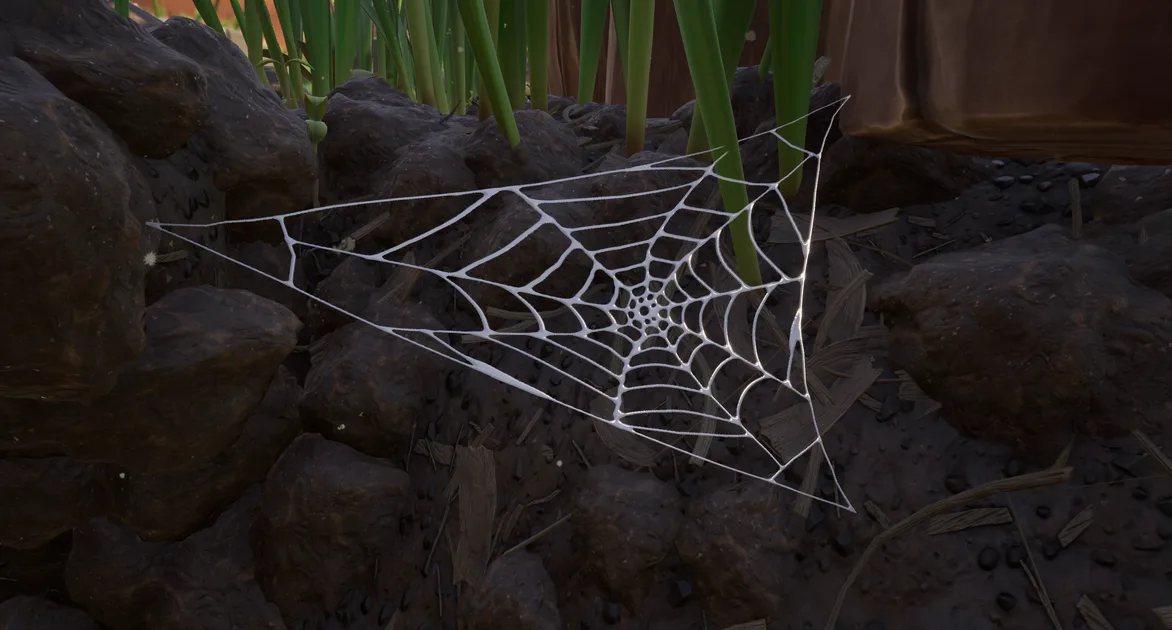
Image source: Bing (Web (fair-use with source credit))
Harvesting Lint from Webs
Harvesting is as simple as approaching a web and pressing the interact button. Each web typically drops a small stack of lint. The exact amount can vary slightly, but you can generally expect a consistent yield per web.
A few things to keep in mind while harvesting:
- Watch your surroundings. Spider webs attract spiders. Orb weavers and wolf spiders often patrol near web clusters. Clear the area first if you're under-equipped.
- Don't sprint past them. It's easy to run by a web without noticing. Slow down in known spawn areas and scan for the white, silky texture.
- Mark your map. If you've unlocked the map marker system, tag your favorite web locations. It makes repeat farming runs much faster.
Webs respawn on a timer. You don't need to sleep or reload the game. Just move to another area and come back after a while.
The exact respawn time isn't officially documented by Obsidian Entertainment, but player observations suggest it takes a few in-game days.

Image source: Bing (Web (Web (fair-use with source credit))
How to Craft Lint Rope
Once you've got lint in your inventory, the next step is turning it into something useful. Lint rope is the primary recipe that uses lint as an ingredient. Here's what you need:
| Recipe | Ingredients | Crafting Station |
|---|---|---|
| Lint Rope | 5 Lint | Any crafting station |
That's it. Five lint makes one lint rope. You can craft it at any basic crafting station.
No special upgrades or BURG.L chip unlocks required for the base recipe.
Lint rope is used in a variety of crafting recipes, including:
- Ziplines. Essential for fast traversal across the Yard.
- Certain armor pieces. Some mid-tier armor sets require lint rope as a component.
- Base building elements. Rope is used in various structural recipes.
Stock up on lint rope whenever you can. It's one of those materials you'll always need more of, especially once you start building zipline networks. If you're interested in how lint behaves in the real world and why it clumps together, check out our article on how to get lint off of clothes in dryer.

Image source: Bing (Web (fair-use with source credit))
Best Places to Farm Lint
Not all spider web locations are created equal. Some spots are safer, more densely packed, or easier to loop through on a farming route. Here are the top locations ranked by efficiency.
The Oak Tree Cluster. This is the single best lint farming spot in the game. Multiple webs spawn around the base of the oak tree and on nearby grass stems. You can hit four to five webs in under a minute.
The area is relatively safe early on, with fewer aggressive spider spawns compared to other zones.
The Hedge Line. The hedge along the southern part of the Yard has webs attached to branches and leaves at regular intervals. It's a linear path, so you can just run along and harvest as you go. Watch for orb weavers hiding in the foliage.
Sandbox Perimeter. The edges of the sandbox, especially near the fence posts, have reliable web spawns. This area is close to a field station, so you can craft lint rope on the spot without running back across the map.
Porch Supports. A few webs spawn on the wooden supports near the porch. It's not the highest yield, but it's a quick stop if you're already in the area gathering other resources.
If you're running a dedicated lint farm, set up a small base near the oak tree. Drop a storage chest, a crafting station, and maybe a zipline anchor. That way you can harvest, craft, and store without wasting time on long trips.
For a real-world parallel on managing lint buildup, our guide on how to remove lint from towels in washing machine covers practical solutions that work on the same principle of regular maintenance.
Spider Silk vs Lint: Which Should You Use?
This is a common point of confusion. Spider silk and lint are related but not interchangeable. Here's how they compare.
| Attribute | Lint | Spider Silk |
|---|---|---|
| Source | Spider webs (harvested) | Spiders (dropped on kill) |
| Primary Use | Lint rope crafting | Tier 2 armor and tools |
| Availability | High (renewable webs) | Moderate (requires combat) |
| Danger Level | Low (just walk up and grab) | High (you have to fight spiders) |
Lint is your go-to for rope-based recipes. Spider silk is used for higher-tier gear like spider armor sets and certain upgraded tools. You'll need both as you progress, but lint is far easier and safer to collect.
The practical takeaway is simple. Farm lint from webs for your rope needs. Hunt spiders for silk when you're geared up and ready for a fight.
Don't waste early-game time trying to farm silk when lint does the job for base building and ziplines.
If you're wondering whether spider silk can substitute for lint in any recipe, the answer is no. The crafting system treats them as separate materials. You'll need to gather both independently.
Our article on how to get rid of lint on blankets might seem unrelated, but it's a good reminder that different materials call for different handling, even in real life.
Common Mistakes When Gathering Lint
Even experienced players trip up on lint farming. Here are the most frequent errors and how to avoid them.
Ignoring web respawn timers. Some players harvest a web once and never come back, assuming it's gone for good. Webs do respawn. Revisit your farming spots every few in-game days and you'll have a steady supply.
Farming in dangerous zones without preparation. The trash heap and the upper yard have webs, but they also have more aggressive enemies. Don't run into these areas under-equipped just for a few extra lint. Stick to the oak tree and hedge until you're ready.
Not crafting lint rope immediately. Lint stacks take up inventory space. If you're gathering a lot of it, stop at a crafting station and convert it to rope as you go. Rope is more useful and easier to store in bulk.
Confusing lint with spider silk. As we covered above, these are different materials. Don't assume you can use one in place of the other. Check your crafting recipes before you head out on a gathering run.
Overlooking nearby webs while focused on combat. If you're fighting spiders in an area with webs, take thirty seconds after the fight to harvest any nearby webs. You're already there. Grab the free resources before you move on.
Pro Tips for Efficient Lint Farming
Once you've got the basics down, these strategies will help you maximize your lint output.
Set up a web route. Identify three to four web clusters you can hit in a single loop. The oak tree, hedge, and sandbox make a great triangle. Run it once per in-game morning and you'll accumulate lint fast.
Use a field station nearby. If there's a field station close to your farming route, use it as a crafting pit stop. Convert lint to rope on the fly so you're not carrying raw materials across the map.
Pair lint runs with other gathering. Don't make a trip just for lint. Combine it with collecting weed stems, clover leaves, or aphid kills along the way. Efficiency is everything in Grounded's survival loop.
Upgrade your backpack early. More inventory space means more lint per run. Prioritize backpack upgrades if you're doing a lot of resource gathering. You'll thank yourself later.
Play with a friend. In multiplayer, one person can harvest webs while the other watches for spiders. It's faster, safer, and you can cover more ground in less time.
If you're into the crafting side of things, you might also enjoy our guide on how to find grainline on fabric. It's a different kind of material awareness, but the same attention to detail applies.
FAQs About Getting Lint in Grounded
Can you buy lint from BURG.L?
No. BURG.L doesn't sell lint or lint rope. You have to gather it yourself from spider webs in the Yard.
There's no shortcut or vendor option for this resource.
Do spider webs respawn after you harvest them?
Yes. Spider webs respawn after a few in-game days. You can revisit the same locations repeatedly for a steady supply of lint.
Just give it some time between runs.
What is lint rope used for in Grounded?
Lint rope is primarily used for ziplines, certain armor recipes, and base building components. It's one of the most versatile mid-game materials, so always keep a stockpile.
Can you get lint without fighting spiders?
Absolutely. Harvesting lint from webs doesn't require combat. Just walk up and interact with the web.
Spiders may be nearby, but you don't have to engage them to collect the resource.
Is there a difference between lint and spider silk?
Yes. Lint comes from webs and is used for rope. Spider silk drops from killed spiders and is used for advanced armor and tools.
They're separate materials with separate uses.
What's the best early-game location for lint?
The oak tree area is the best early-game lint spot. It has multiple web spawns, is relatively safe, and is easy to access from the starting area.