How to Get Urine/pee Smell Out of Clothes: Easy Methods
If you've ever pulled a load out of the washer only to catch that unmistakable whiff of urine, you know how frustrating it is. The truth is, most people make it worse before they make it better, usually by reaching for hot water or tossing the clothes straight in the dryer. Getting urine smell out of clothes isn't complicated, but it does require the right approach for your specific situation.
Urine is a protein-based waste that bonds to fabric fibers and breeds bacteria, which is what actually produces the ammonia-like odor you're smelling. According to the University of Georgia Extension, washing protein stains in hot water permanently sets both the stain and the smell into the fabric. The method that works best depends on how old the stain is, what the garment is made of, and what you have on hand.
Let's walk through it step by step.
Image source: Openverse / Openverse contributor
Quick Answer: The 5-Minute Method That Actually Works
Rinse the affected area in cold water immediately. Soak the garment in a solution of one cup white vinegar per gallon of cold water for 30 to 60 minutes. Wash on a cold or warm cycle with an enzyme-based laundry detergent.
Air-dry the garment and confirm the odor is gone before using a dryer. Repeat the soak if any smell remains.
Why Pee Smell Lingers in Clothes — and Why Most People Get It Wrong
The reason urine smell sticks around isn't just the liquid itself. It's what happens after it dries. Urea and uric acid crystals bond to fabric fibers, and bacteria feed on those compounds, producing ammonia gas.
That's the sharp, sour smell you notice.
Regular detergent alone can't break those crystals apart. It might clean the surface, but the odor-causing compounds stay locked in the fibers. That's why clothes can come out of a normal wash cycle still smelling like urine.
The most common mistake is using hot water. Heat denatures the proteins in urine, essentially cooking them into the fabric. Once that happens, the smell is far harder, sometimes impossible, to remove.
Another frequent error is machine-drying the clothes before confirming the odor is gone. Dryer heat sets whatever residue remains, locking the smell in permanently.
People also tend to mask the odor with fabric sprays or scented detergents instead of neutralizing it. Fragrance covers the smell for a day or two, but the bacteria are still there. The odor always comes back.
How Urine Interacts with Fabric (What's Really Happening)
Fresh urine is mostly water, urea, and salts. At this stage, it's relatively easy to flush out with cold water and a basic wash. The problem starts when urine sits.
Over time, bacteria break down the urea into ammonia. Uric acid, which is present in smaller amounts, forms microscopic crystals that cling tightly to fibers. These crystals are water-insoluble, meaning plain water won't dissolve them.
They need an acidic or enzymatic solution to break the bond.
Different fabrics hold onto these compounds differently. Cotton and other natural fibers are porous, so urine penetrates deep into the weave. Synthetic fabrics like polyester are less absorbent but can trap odor molecules in the fiber structure, which is why synthetic athletic wear often smells worse after washing than cotton does.
The pH of the cleaning solution matters too. Uric acid crystals dissolve more readily in acidic environments, which is why white vinegar, a mild acetic acid, is one of the most effective household remedies.
The Factors That Change Everything: What You're Working With
Not every urine stain is the same, and the right approach depends on a handful of variables. Before you start treating, take stock of what you're dealing with.
Fresh vs. Set-In Stains
Fresh urine, meaning it happened within the last few hours, is the easiest to remove. A cold-water rinse followed by a standard wash with an enzyme detergent will usually do the job.
Set-in stains are a different story. If the urine has dried and been sitting for more than 24 hours, or if the garment has already been washed and dried with the odor still present, you're dealing with bonded uric acid crystals. These require a longer soak in an acidic or enzymatic solution, and you may need to repeat the process.
Fabric Type and Delicacy
Sturdy cotton and linen can handle aggressive soaking, hot-ish water (up to warm, not hot), and stronger cleaning agents like hydrogen peroxide. Delicate fabrics like silk, wool, and rayon need gentler treatment. Vinegar diluted in cold water is usually safe for most delicates, but hydrogen peroxide can bleach or weaken sensitive fibers.
Always check the care label. If the garment says "dry clean only," take it to a professional and point out the stain. Don't experiment with home remedies on fabrics you can't afford to damage.
Type of Urine (Human, Cat, Dog, Baby, Adult Incontinence)
Human infant urine is relatively mild and low in uric acid concentration. It's the easiest to clean. Adult human urine, especially from individuals on certain medications or with concentrated urine due to dehydration, can be significantly stronger.
Pet urine, particularly cat urine, is notoriously difficult. Cats produce urine with very high concentrations of uric acid, and the smell is pungent and persistent. Dog urine falls somewhere in between.
For pet urine on clothing, an enzyme-based cleaner is almost always necessary because household vinegar alone may not break down the uric acid crystals fully.
Adult incontinence situations often involve larger volumes and repeated exposure. In these cases, pre-soaking every affected garment in a vinegar solution before washing is the most practical routine.
Step-by-Step Treatment for Fresh Urine Smell
If you catch it early, this process takes about an hour of mostly passive soaking time.
Step 1: Rinse immediately in cold water. Hold the affected area under a cold running tap or submerge it in a basin of cold water. Gently agitate the fabric to flush out as much urine as possible. Do not use warm or hot water at any point during this step.
Step 2: Prepare a vinegar soak. Fill a basin or sink with cold water and add one cup of standard white vinegar (5% acidity) per gallon of water. Submerge the garment completely.
Step 3: Soak for 30 to 60 minutes. For light odors, 30 minutes is usually enough. For stronger smells, let it sit for up to two hours. Don't exceed six hours, as prolonged acid exposure can weaken some fibers.
Step 4: Wash with enzyme detergent. Transfer the garment to the washing machine. Use an enzyme-based laundry detergent and run a cold or warm cycle. Check the care label for the maximum safe water temperature.
Step 5: Air-dry and inspect. Hang the garment to dry in a well-ventilated area or outdoors. Do not machine-dry. Once it's fully dry, smell the previously affected area.
If any odor remains, repeat the vinegar soak and wash cycle.
This method works for the majority of fresh urine incidents on standard cotton, polyester, and blended fabrics. If you're dealing with a set-in smell or a delicate garment, the next section covers those scenarios.
Step-by-Step Treatment for Set-In or Stubborn Urine Odor
When urine has dried, been washed in hot water, or survived a full dryer cycle, you're dealing with bonded uric acid crystals. These won't budge with a standard wash. You need a longer, more targeted approach.
Step 1: Soak in cold water for 30 minutes. This rehydrates the crystals and loosens surface residue. Use plain cold water. Don't add anything yet.
Step 2: Apply an enzyme cleaner directly to the affected area. Enzyme-based products contain bacteria cultures that literally digest uric acid crystals. Saturate the stained area and let it sit for at least one hour. For heavy buildup, leave it overnight.
Step 3: Soak in a vinegar solution. Fill a basin with cold water and add one cup of white vinegar per gallon. Submerge the garment for two to four hours. The acid helps dissolve any remaining crystals the enzymes didn't break down.
Step 4: Wash on a warm cycle with enzyme detergent. Use the warmest water the care label allows. Add a full dose of enzyme-based detergent. Do not use chlorine bleach, as it can react with ammonia in urine and set the odor further.
Step 5: Air-dry and reassess. Hang the garment outside if possible. Sunlight acts as a natural deodorizer through UV exposure. Once dry, smell the area.
If the odor persists, repeat steps two through five. Some set-in stains require two or three full rounds.
This process is longer, but it's the most reliable method for odor that's been heat-set or left untreated for days.
Home Remedies That Work — Ranked by Effectiveness
Not everyone has enzyme cleaner on hand. Here's how the most common household options stack up, based on how they interact with uric acid and ammonia.
Image source: Bing (Web (fair-use with source credit))
White Vinegar
Vinegar is the most effective household remedy for urine odor. Its acetic acid dissolves uric acid crystals and neutralizes ammonia on contact. Use one cup per gallon of cold water as a pre-soak.
It's safe for most washable fabrics and won't leave a vinegar smell once the garment dries.
Baking Soda
Baking soda absorbs odors rather than breaking down the source. It works best as a supplement, not a standalone solution. Add half a cup to your wash cycle alongside detergent.
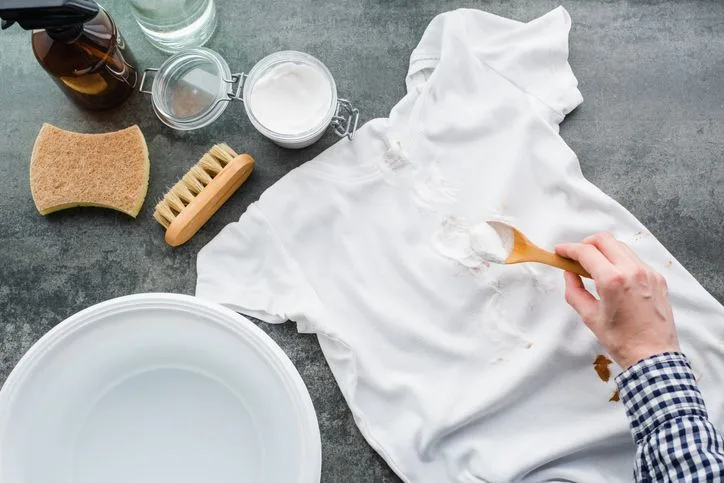
For spot treatment, make a paste with water, apply it to the stain, and let it dry before brushing off and washing.
Hydrogen Peroxide (Use With Caution)
Three percent hydrogen peroxide can break down uric acid and kill odor-causing bacteria. It's effective, but it's also a mild bleaching agent. Test it on an inconspicuous area first.
Do not use on dark-colored garments, silk, or wool. Apply directly to the stain, let it bubble for 10 minutes, then rinse thoroughly with cold water before washing.
Enzyme-Based Cleaners
These are the gold standard. Products like Nature's Miracle or Rocco & Roxie contain live enzyme cultures that consume uric acid crystals at the molecular level. They outperform vinegar and baking soda on set-in stains, especially pet urine.
Follow the product's soak time instructions carefully. Most require at least 30 minutes of contact time to work.
Quick comparison:
| Method | Best For | Soak Time | Fabric Safety |
|---|---|---|---|
| White vinegar | Fresh to moderate odors | 30 min to 4 hrs | Most fabrics |
| Baking Soda | Mild odor absorption | Add to wash cycle | All fabrics |
| Hydrogen Peroxide | Stubborn bacteria/odor | 10 min spot treat | Light colors only |
| Enzyme cleaner | Set-in and pet urine | 1 to 12 hrs | Most fabrics |
Products That Outperform Household Staples
For recurring situations, like potty training, pet accidents, or incontinence care, commercial enzyme cleaners are worth keeping on hand. They're formulated specifically to break down uric acid, which vinegar and baking soda can only partially address.
Image source: Bing (Web (fair-use with source credit))
Look for products that list "enzymes" or "bioenzymatic" on the label. Nature's Miracle, originally designed for pet urine, is widely recommended for human urine on fabric as well. Rocco & Roxie and Simple Green also have strong aggregate reviews for odor elimination on clothing.
For laundry-specific use, enzymatic detergents like Persil Bio or Tide Plus Ultra OXI contain protease enzymes that target protein-based stains. These work well as part of your regular wash routine when you know urine exposure is frequent.
Avoid products that rely solely on fragrance or oxygen bleach. Oxygen bleach (sodium percarbonate) can help with surface stains but doesn't break down uric acid crystals the way true enzymatic cleaners do. Fragrance-based sprays mask the problem and let bacteria continue multiplying underneath.
The Decision Tree: Which Method to Use Based on Your Situation
Here's a straightforward way to pick the right approach without overthinking it.
You Have Fresh Urine on Sturdy Cotton
Rinse in cold water, soak in vinegar solution for 30 minutes, wash with enzyme detergent on warm, and air-dry. This resolves the vast majority of fresh accidents on everyday clothing.
You Have Set-In Odor on Delicates
Skip hydrogen peroxide and hot water. Use a diluted vinegar soak (one cup per two gallons) for one to two hours, then hand-wash gently with a mild enzyme detergent. Lay flat to dry.
Repeat if needed.
The Smell Survived a Full Wash Cycle
The odor was likely heat-set. Apply enzyme cleaner directly to the area and let it sit overnight. Soak in vinegar solution the next day for two to four hours.
Wash again on warm with enzyme detergent. Air-dry and check. You may need two rounds.
You're Dealing with Pet Urine on Clothes
Cat and dog urine has higher uric acid concentration than human urine. Use an enzyme-based pet odor remover as your primary treatment. Saturate the area, wait at least one hour, then soak in vinegar solution.
Wash with enzyme detergent. Do not machine-dry until you've confirmed the smell is completely gone.
7 Common Mistakes That Make Urine Smell Worse
These are the errors that turn a minor laundry problem into a permanent one.
1. Washing in hot water. Heat bonds uric acid crystals to fabric fibers. Always start with cold water.
2. Using chlorine bleach. Bleach reacts with ammonia in urine and can permanently set the stain and odor. It also weakens fibers over time.
3. Machine-drying before confirming the smell is gone. Dryer heat locks in whatever residue remains. Air-dry first, always.
4. Relying on scented detergent alone. Fragrance covers odor temporarily but doesn't eliminate the bacteria or uric acid causing it.
5. Skipping the pre-soak. Detergent in a standard wash cycle doesn't have enough contact time to break down crystals. Soaking is essential.
6. Mixing bleach and vinegar. This produces toxic chlorine gas. Never combine these, even in separate steps on the same load.
7. Overloading the washing machine. Clothes need room to agitate freely. An overcrowded machine reduces cleaning effectiveness and leaves odor behind.
What to Do If the Smell Still Won't Leave
Sometimes even a full enzyme soak and vinegar treatment doesn't fully eliminate the odor. Before you give up on the garment, try these escalation steps.
Try a longer enzyme soak. Some products recommend up to 12 hours of contact time for heavy contamination. Re-saturate the area if it dries out during the soak. The enzymes need moisture to stay active.
Use sunlight as a natural deodorizer. Hang the garment outside in direct sun for several hours. UV radiation breaks down odor-causing organic compounds and kills residual bacteria. This works especially well after a vinegar soak, since the acid pre-treats the crystals and the UV finishes the job.
Image source: Bing (Web (fair-use with source credit))
Consider laundry stripping. For white or light-colored cotton, laundry stripping can remove built-up residue that traps odor. Dissolve one cup each of washing soda, borax, and powdered laundry detergent in a bathtub of hot water. Soak the garment for four to six hours, stirring occasionally.
Rinse thoroughly and air-dry. Do not use this method on delicates or dark fabrics.
Check your washing machine. If multiple loads come out smelling off, the machine itself may be the problem. Run an empty hot cycle with two cups of white vinegar or a washing machine cleaner. Clean the rubber gasket on front-loaders, where bacteria and residue accumulate.
If none of these steps work after two attempts, the odor has likely bonded at a molecular level that home treatment can't reverse. At that point, the garment may not be salvageable.
When Urine Odor Signals Something Else (Health Note)
A strong or unusual urine smell on clothing isn't always just a laundry problem. Sometimes it's worth paying attention to what your body is telling you.
Urine with a sharp ammonia smell can indicate dehydration. When urine is more concentrated, the ammonia content is higher and the odor lingers more aggressively on fabric. Increasing water intake often reduces both the smell and the difficulty of cleaning it.
A sweet or fruity odor in urine can be a sign of elevated blood sugar. This is particularly relevant for individuals managing diabetes or prediabetes. If you notice this consistently, it's worth mentioning to a healthcare provider.
Foul-smelling urine that's noticeably different from the usual can indicate a urinary tract infection. UTIs change the bacterial composition of urine, which alters the smell. If the odor is accompanied by burning, urgency, or cloudy appearance, seek medical advice.
For caregivers managing incontinence, persistent strong odor despite proper cleaning routines may warrant a medical check. Certain medications, dietary changes, and kidney function can all affect urine composition and odor intensity.
Frequently Asked Questions
Does baking soda alone remove urine smell from clothes?
Baking soda absorbs surface odors but doesn't break down uric acid crystals, which are the root cause of persistent urine smell. It works best as a supplement to vinegar or enzyme treatment, not as a standalone solution.
Can I use hot water if the stain is really bad?
No. Hot water sets protein-based stains and odors into fabric fibers, making them significantly harder to remove. Always use cold or warm water for urine-affected clothing.
How do I get cat pee smell out of clothes?
Cat urine has very high uric acid concentration. Use an enzyme-based pet odor remover as your primary treatment, followed by a vinegar soak and a wash with enzyme detergent. Avoid heat drying until the smell is completely gone.
Why do my clothes still smell like pee after washing?
The most common reasons are using hot water, skipping the pre-soak, or machine-drying before the odor was fully eliminated. Uric acid crystals remain bonded to fibers without proper acidic or enzymatic treatment.
Is it safe to mix vinegar and baking soda for laundry?
They neutralize each other when combined, producing water and carbon dioxide. This reduces the effectiveness of both. Use them in separate steps: vinegar as a soak first, then baking soda added to the wash cycle.
Will hydrogen peroxide bleach my clothes?
Three percent hydrogen peroxide can lighten or bleach dark and delicate fabrics. Always test on a hidden area first. It's safest on white or light-colored cotton.