How to Remove Toothpaste Stains From Clothing 2026
Nothing's worse than discovering a bright white toothpaste smear on your favorite shirt right as you're heading out the door. Learning how to remove toothpaste stains from clothing is simpler than most people think, but the method that works depends on a few key things: what kind of toothpaste it is, what fabric you're dealing with, and how long the stain has been sitting there.
The reason most advice falls flat is that it treats every toothpaste stain the same. In our research, we found that whitening toothpaste, gel formulas, and regular paste each leave behind different residue compositions, and they don't all respond to the same treatment. Titanium dioxide in whitening pastes, for example, creates a pigment stain that needs a completely different approach than the detergent-based mark left by a standard fluoride paste.
Getting this right means matching your method to your specific situation, and that's exactly what we'll walk you through.
Image source: Bing (Web (fair-use with source credit))
Quick Answer
Scrape off excess toothpaste with a dull edge. Rinse the stain from the back using cold water. Apply liquid dish soap directly and work it in gently.
Soak in cold water with white vinegar for 15 to 30 minutes. Wash on the garment's recommended cycle and air dry until you confirm the stain is gone.
Why Toothpaste Stains Are Stubborn (and Why Most Advice Gets It Wrong)
Toothpaste might seem like it should wash right out, but it's actually a cocktail of several ingredients that each behave differently on fabric. Most pastes contain abrasives like hydrated silica or calcium carbonate, humectants like sorbitol and glycerin, surfactants like sodium lauryl sulfate (SLS), and fluoride compounds. Whitening varieties add titanium dioxide, a white pigment that binds tightly to fibers.
The real problem is that many people reach for hot water or throw the garment straight into the dryer. Heat sets the stain, especially the titanium dioxide in whitening formulas. Once that pigment bakes into the fabric, it becomes significantly harder to lift.
The American Cleaning Institute recommends cold water as the default for unknown stains, and toothpaste is no exception.
Another common mistake is aggressive rubbing. That pushes the paste deeper into the fabric weave instead of lifting it out. Gentle blotting and controlled soaking almost always outperform scrubbing.
What Actually Causes Toothpaste Stains on Clothes
The stain you're seeing isn't just surface residue. Toothpaste ingredients interact with fabric fibers in three distinct ways.
Abrasive particles like silica physically embed into the weave, especially on looser fabrics like cotton t-shirts. Surfactants like SLS spread the residue outward as they dissolve, making the stain look larger than the original smear. Titanium dioxide in whitening pastes acts like a dye, binding to fibers through electrostatic attraction. That's why whitening toothpaste leaves a chalky white mark that's far more stubborn than a regular paste smudge.
Gel toothpastes behave differently again. They tend to dry into a transparent film that's easy to miss until it's been heat-set. By the time you notice it, the stain has often been through a full wash and dry cycle, locking it in.
First: What Kind of Stain Are You Dealing With?
Before you grab any cleaning agent, take ten seconds to assess what you're working with. The right approach depends on three variables: how old the stain is, what fabric it's on, and what type of toothpaste caused it.
Fresh vs. Set-In Stains — Why Timing Changes Everything
A fresh toothpaste stain, meaning it's been on the fabric for less than an hour, is dramatically easier to remove than one that's dried and been through the laundry. Fresh stains haven't had time to bond with fabric fibers, so a simple cold water rinse and dish soap treatment usually does the job.
Set-in stains, on the other hand, have had time to dry, oxidize, and bond. If the garment has already been through a dryer, the heat has essentially baked the stain into the fabric. These require a longer soak and often multiple treatment cycles.
The sooner you act, the better your chances of a one-and-done fix.
The Fabric Type Rule: Cotton, Polyester, Silk, Wool, and Delicates
Not all fabrics can handle the same treatment. Here's how to adjust based on what you're working with:
- Cotton and cotton blends: These are the most forgiving. You can use oxygen bleach, vinegar soaks, and warm water without much risk.
- Polyester: Responds well to dish soap and cold water. Avoid high heat, which can melt or warp the fibers.
- Silk: Extremely delicate. Use only cold water and mild dish soap. No vinegar, no bleach, no rubbing alcohol. Blot gently and consider professional cleaning for anything beyond a light smudge.
- Wool: Similar to silk in sensitivity. Cold water only, mild soap, and never wring or twist the fabric.
- Dry-clean-only garments: Check the care label first. If it says dry-clean-only, test any treatment on a hidden seam before proceeding. When in doubt, take it to a professional.
Regular Toothpaste vs. Whitening Toothpaste vs. Gel
| Toothpaste Type | Primary Stain Agent | Stain Appearance | Difficulty Level |
|---|---|---|---|
| Regular paste | SLS surfactants, abrasives | Slightly cloudy smear | Easy to moderate |
| Gel | Humectants, dyes | Transparent film, sometimes tinted | Moderate |
| Whitening | Titanium dioxide | Bright white chalky mark | Moderate to difficult |
Whitening toothpaste is the one that causes the most trouble. Titanium dioxide is the same pigment used in paint and sunscreen, and it clings to fabric fibers with surprising tenacity. If you're dealing with a whitening paste stain, plan on using oxygen bleach or hydrogen peroxide (on white fabrics only) as part of your treatment.
The Quick-Fix Method If You're in a Rush
Sometimes you don't have time for a full soak-and-wash cycle. Maybe you're in a hotel bathroom or you just noticed the stain as you're walking out the door. Here's what to do when speed matters.
The 30-Second Emergency Response
Grab a napkin or paper towel and gently lift away any toothpaste sitting on the surface. Don't rub. Just lift.
If you have access to cold water, run it through the back of the stain. This pushes the residue out of the fabric instead of deeper in.
If you're near a sink, put a drop of hand soap or dish soap on the stain and work it in with your fingertips. Rinse with cold water. This won't remove a whitening paste stain completely, but it will reduce a regular paste mark enough to get you through the day.
What to Absolutely Do in the First 60 Seconds
- Scrape off excess with a dull edge (spoon, butter knife, even a credit card).
- Rinse from the back of the fabric with cold water.
- Apply a small amount of liquid soap and gently work it in.
- Blot with a clean cloth or paper towel. Don't rub.
What you should never do in those first 60 seconds: use hot water, throw it in the dryer, or ignore it and hope it fades on its own. Heat is the enemy of toothpaste stains. Every minute you keep the fabric cool and wet improves your odds of a full recovery.
Image source: Bing (Web (fair-use with source credit))
The Full Step-by-Step Stain Removal Walkthrough
When you've got the time to do this properly, follow this complete process. It covers everything from initial treatment through final drying, and it's designed to work on the widest range of toothpaste stains and fabric types.
Phase 1: Scrape, Rinse, and Pre-Treat
Start by removing any toothpaste sitting on top of the fabric. Use a dull knife, spoon edge, or even a stiff piece of cardboard. Gently lift the excess off without pressing it deeper.
Next, hold the stained area under cold running water, with the stain facing downward. Let the water flow through the back of the fabric. This flushes out loose particles before they can settle further into the fibers.
Once rinsed, apply a small amount of liquid dish soap directly to the stain. Dawn or any standard degreasing dish soap works well here. Use your fingertips to gently work the soap into the fabric.
Let it sit for five to ten minutes.
Phase 2: Soak the Right Way (Cold Water + the Right Agent)
After pre-treating, fill a basin or clean sink with cold water. Add your chosen cleaning agent based on the stain type and fabric:
- For regular paste on cotton or polyester: Add one cup of white vinegar per gallon of cold water.
- For whitening paste on white fabrics: Add one scoop of oxygen bleach (like OxiClean) per gallon of cold water.
- For gel toothpaste on synthetics: Add a tablespoon of dish soap and a half cup of white vinegar.
- For silk or wool: Cold water only with a few drops of mild dish soap. No vinegar, no bleach.
Submerge the garment completely. Let it soak for 15 to 30 minutes for fresh stains, or one to two hours for set-in stains. Check the stain periodically.
If it's fading, you're on the right track.
Phase 3: Check, Repeat, and Wash
After soaking, check the stain in good lighting. If it's still visible, repeat the soak with fresh solution. Stubborn whitening paste stains sometimes need two or three rounds.
Once the stain has faded to a faint mark or disappeared entirely, wash the garment according to its care label. Use cold or warm water as the fabric allows. Add your regular laundry detergent.
For white cotton, you can include oxygen bleach in the wash cycle for extra lifting power.
Phase 4: Air Dry and Confirm — Don't Lock It In
This is the step where most people lose the battle. Do not put the garment in the dryer until you're certain the stain is completely gone. Heat from the dryer will set any remaining residue permanently.
Instead, air dry the garment flat or on a hanger. Once it's fully dry, inspect the area again in natural light. If you can still see a faint mark, repeat the treatment cycle.
It's far better to do a second round than to bake the stain in and lose the garment for good.

Image source: Bing (Web (fair-use with source credit))
Stain Removal Agents Compared — Which One to Use and When
Not every cleaning agent works for every toothpaste stain. Here's a breakdown of the most effective options and when to reach for each one.
White Vinegar Soak
White vinegar is the safest all-around option. It's mildly acidic, which helps break down the surfactants and alkaline compounds in toothpaste. It's safe for cotton, polyester, and most synthetic blends.
Mix one part white vinegar with two parts cold water for a standard soak. It won't tackle tough titanium dioxide stains on its own, but it's excellent for regular paste and gel residue.
Oxygen Bleach (OxiClean)
Oxygen bleach is the go-to for whitening toothpaste stains on white or colorfast fabrics. It releases hydrogen peroxide when dissolved in water, which breaks down the titanium dioxide pigment. Follow the package directions, usually one scoop per gallon of water.
Safe for cotton and polyester. Do not use on silk, wool, or spandex.
Dish Soap Pre-Treatment
Liquid dish soap is your first line of defense for fresh stains. It's a surfactant that lifts oily and particulate residue from fabric fibers. Apply it directly to the stain before soaking or washing.
Any standard degreasing dish soap works. This is the gentlest option and safe for all fabric types, including delicates.
Hydrogen Peroxide (3%)
Standard drugstore hydrogen peroxide (3% concentration) is effective on white fabrics for whitening toothpaste stains. Apply it directly to the stain, let it bubble for a few minutes, then rinse with cold water. It acts as a mild bleach, so never use it on colored or patterned fabrics unless you've spot-tested first.
Rubbing Alcohol
Rubbing alcohol (isopropyl alcohol, 70%) can help dissolve the humectants in gel toothpastes. Dab a small amount on the stain with a cotton ball, then rinse with cold water. It evaporates quickly, so it's best for spot treatments rather than full soaks.
Safe for most synthetics. Test on delicates first.
Enzyme-Based Commercial Stain Removers
Products like Zout or Shout contain enzymes that break down protein and organic compounds. They're effective on toothpaste stains that have set in over time. Spray or apply directly to the stain, wait five to ten minutes, then wash as directed.
These are generally safe for most washable fabrics, but always check the product label for specific fabric restrictions.
| Agent | Best For | Safe On | Avoid On |
|---|---|---|---|
| White vinegar | Regular paste, gel | Cotton, polyester, blends | Silk (can weaken fibers) |
| Oxygen bleach | Whitening paste on whites | White cotton, polyester | Silk, wool, colored fabrics |
| Dish soap | Fresh stains, all types | All fabrics including delicates | Nothing |
| Hydrogen peroxide (3%) | Whitening paste on whites | White cotton, white polyester | Colored fabrics, silk, wool |
| Rubbing alcohol | Gel toothpaste | Synthetics, cotton | Silk, acetate, triacetate |
| Enzyme stain removers | Set-in stains | Most washable fabrics | Silk, wool (check label) |
Image source: Bing (Web (fair-use with source credit))
What Never To Do with a Toothpaste Stain
Even with the right intentions, it's easy to make a toothpaste stain worse. These are the mistakes we see most often, and they're all avoidable.
The Hot Water Trap
Hot water sets toothpaste stains. It causes the surfactants to bond with fabric fibers and bakes titanium dioxide pigment into the weave. Always use cold water for rinsing, soaking, and washing toothpaste stains.
Warm water is acceptable for cotton after the stain has been treated, but never start with heat.
Rubbing Instead of Blotting
Rubbing a toothpaste stain grinds the abrasive particles deeper into the fabric and spreads the residue outward. Blotting lifts the stain without pushing it in. Use a clean cloth or paper towel and press gently.
Work from the outside of the stain toward the center to prevent spreading.
Throwing It in the Dryer Too Soon
The dryer is the number one reason toothpaste stains become permanent. If any residue remains after washing, the dryer's heat will set it permanently. Always air dry first.
Inspect the garment in good light. Only machine dry once you're confident the stain is completely gone.
Using Chlorine Bleach on Delicates
Chlorine bleach dissolves silk and wool fibers. It can also yellow certain synthetics. If you need bleaching power, use oxygen bleach instead.
It's far gentler and effective on the compounds found in toothpaste stains.
Mixing Cleaning Agents Blindly
Never mix bleach with vinegar or ammonia. The combination produces toxic chloramine gas. Stick to one cleaning agent at a time.
If you want to switch from one to another, rinse the garment thoroughly in between.
Real-Life Scenarios and How to Handle Them
Let's put this all together with a few situations that come up regularly. Each one shows how the variables change the approach.
Scenario A: Kid Gets Whitening Toothpaste on a Cotton T-Shirt at Bednight
You discover the stain in the morning. It's dried and the shirt went through the wash and dry yesterday. The stain is bright white from titanium dioxide.
Start by soaking the shirt in cold water with oxygen bleach for one to two hours. Check the stain. If it's fading, repeat the soak.
Once the mark is gone or nearly gone, wash the shirt on a warm cycle with oxygen bleach added to the detergent. Air dry and inspect. This usually takes two to three treatment cycles for a fully set-in whitening stain.
Scenario B: Gel Toothpaste on a Silk Blouse Right Before Work
You've got thirty minutes. The stain is fresh but the fabric is delicate. Silk can't handle vinegar, bleach, or rubbing alcohol.
Rinse the stain immediately with cold water from the back. Apply a drop of mild dish soap and gently work it in with your fingertips. Rinse again.
Blot with a clean white cloth. If a faint mark remains, it's better to wear it as-is and treat it properly at home than to risk damaging the silk with aggressive treatment.
Scenario C: Dried Toothpaste on a Wool Sweater You Just Noticed
The stain has been there for days. Wool is sensitive to heat, agitation, and harsh chemicals.
Soak the stained area in cold water with a few drops of mild dish soap for 30 minutes. Gently press the water through the fabric. Do not wring, twist, or rub.
Rinse with cold water. If the stain persists, take the sweater to a professional dry cleaner and point out the stain. Wool is not worth risking with DIY bleach treatments.
Scenario D: Scrub Uniform with Regular Paste — It Won't Budge
You've tried washing it twice and the mark is still visible. The surfactants in the paste have bonded with the fabric fibers.
Pre-treat with liquid dish soap and let it sit for ten minutes. Then soak in a white vinegar solution (one part vinegar to two parts cold water) for 30 minutes. Wash on the warmest temperature the care label allows.
Add oxygen bleach if the uniform is white. Air dry and check. Repeat if needed.
Hard Water, Humidity, and Other Hidden Factors That Affect Results
Your local water and environment can quietly affect how well stain removal works. Hard water, which contains high levels of calcium and magnesium, can react with surfactants in toothpaste and cleaning agents, reducing their effectiveness. If you have hard water, you may need an extra rinse cycle to fully remove soap and loosened stain particles.
High humidity slows air drying, which means the garment stays damp longer. That's not necessarily a problem for the stain itself, but it can lead to musty odors if the fabric takes more than 24 hours to dry. Use a fan or dry the garment near an open window to speed things up.
Water temperature from your tap also varies by season and region. In winter, cold water from the tap can be significantly colder than in summer. That's actually better for stain removal, but if your hands are too cold to work comfortably, use the coldest water you can tolerate rather than switching to warm.
When to Call a Professional
Sometimes the smartest move is to hand it off to someone with commercial-grade equipment and solvents.
Signs the Stain Is Beyond Home Treatment
If you've gone through three full treatment cycles and the stain is still clearly visible, it's probably set beyond what household products can handle. Other warning signs include the stain changing color (which can indicate a chemical reaction with the fabric) or the fabric becoming thin or discolored from repeated treatment.
When the Garment Is Worth the Dry-Cleaning Bill
For expensive garments like tailored suits, designer pieces, or heirloom items, skip the DIY attempts entirely. Point out the stain to your dry cleaner and tell them what caused it. Professional cleaners have access to solvents that can dissolve titanium dioxide and surfactant residue without damaging delicate fabrics.
The cost of professional cleaning is almost always less than replacing a ruined garment.
Quick-Reference Decision Chart — Your At-a-Glance Guide
Use this chart to match your situation to the right treatment. Start at the top and work down until you find your scenario.
| If Your Situation Is… | Do This |
|---|---|
| Fresh stain, any toothpaste, cotton or polyester | Rinse with cold water, apply dish soap, wash on normal cycle |
| Fresh stain, whitening paste, white fabric | Rinse, soak in oxygen bleach solution, wash with oxygen bleach |
| Fresh stain, any toothpaste, silk or wool | Rinse with cold water, apply mild dish soap, blot gently, air dry |
| Set-in stain, regular paste, cotton or polyester | Pre-treat with dish soap, soak in vinegar solution, wash, air dry |
| Set-in stain, whitening paste, white fabric | Soak in oxygen bleach for 1-2 hours, repeat if needed, wash, air dry |
| Set-in stain, any toothpaste, silk or wool | Soak in cold water with mild dish soap, if stain persists, see a dry cleaner |
| Stain survived the dryer | Soak in oxygen bleach (white fabrics) or vinegar (colors), repeat up to 3 times |
Frequently Asked Questions
Can toothpaste stains become permanent?
Yes, especially if the garment is machine dried before the stain is fully removed. Heat sets the compounds in toothpaste, particularly titanium dioxide in whitening formulas. Always air dry first and confirm the stain is gone before using a dryer.
Does whitening toothpaste stain more than regular toothpaste?
Whitening toothpaste typically causes more stubborn stains because it contains titanium dioxide, a white pigment that binds strongly to fabric fibers. Regular toothpaste stains are usually easier to remove with dish soap and cold water alone.
Can I use bleach on a toothpaste stain?
Oxygen bleach is safe and effective on white cotton and polyester. Chlorine bleach should only be used on white cotton, and never on silk, wool, spandex, or colored fabrics. Always follow the garment's care label.
How long should I soak a toothpaste stain?
Fresh stains need 15 to 30 minutes. Set-in stains benefit from one to two hours. For stubborn whitening paste stains, you may need to soak overnight in an oxygen bleach solution.
Will vinegar damage my clothes?
White vinegar is safe for cotton, polyester, and most synthetic blends when diluted properly. It can weaken silk fibers over time, so avoid using it on silk garments. Always rinse thoroughly after soaking.
What if I already dried the garment with the stain?
You can still try to remove it, but the odds are lower. Soak the garment in oxygen bleach (for white fabrics) or a vinegar solution (for colors) and repeat the treatment cycle up to three times. If the stain persists after three attempts, it's likely permanent.
Removing toothpaste stains from clothing comes down to acting fast and matching your method to the situation. The right approach depends on what kind of toothpaste caused the stain, what fabric you're dealing with, and how long it's been sitting there. Get those three things right, and most stains come out without much trouble.
The reason so many people struggle with this is that generic advice treats every toothpaste stain the same. In our research, we found that whitening toothpaste, gel formulas, and regular paste each leave behind different residue compositions. Titanium dioxide in whitening pastes creates a pigment stain that needs a completely different approach than the surfactant-based mark left by a standard fluoride paste.
That distinction matters more than anything else when you're choosing a treatment.
Image source: Bing (Web (fair-use with source credit))
Quick Answer
Scrape off excess toothpaste with a dull edge. Rinse the stain from the back using cold water. Apply liquid dish soap directly and work it in gently.
Soak in cold water with white vinegar for 15 to 30 minutes. Wash on the garment's recommended cycle and air dry until you confirm the stain is gone.
Why Toothpaste Stains Are Stubborn (and Why Most Advice Gets It Wrong)
Toothpaste might seem like it should wash right out, but it's actually a cocktail of several ingredients that each behave differently on fabric. Most pastes contain abrasives like hydrated silica or calcium carbonate, humectants like sorbitol and glycerin, surfactants like sodium lauryl sulfate (SLS), and fluoride compounds. Whitening varieties add titanium dioxide, a white pigment that binds tightly to fibers.
The real problem is that many people reach for hot water or throw the garment straight into the dryer. Heat sets the stain, especially the titanium dioxide in whitening formulas. Once that pigment bakes into the fabric, it becomes significantly harder to lift.
The American Cleaning Institute recommends cold water as the default for unknown stains, and toothpaste is no exception.
Another common mistake is aggressive rubbing. That pushes the paste deeper into the fabric weave instead of lifting it out. Gentle blotting and controlled soaking almost always outperform scrubbing.
What Actually Causes Toothpaste Stains on Clothes
The stain you're seeing isn't just surface residue. Toothpaste ingredients interact with fabric fibers in three distinct ways.
Abrasive particles like silica physically embed into the weave, especially on looser fabrics like cotton t-shirts. Surfactants like SLS spread the residue outward as they dissolve, making the stain look larger than the original smear. Titanium dioxide in whitening pastes acts like a dye, binding to fibers through electrostatic attraction. That's why whitening toothpaste leaves a chalky white mark that's far more stubborn than a regular paste smudge.
Gel toothpastes behave differently again. They tend to dry into a transparent film that's easy to miss until it's been heat-set. By the time you notice it, the stain has often been through a full wash and dry cycle, locking it in.
First: What Kind of Stain Are You Dealing With?
Before you grab any cleaning agent, take ten seconds to assess what you're working with. The right approach depends on three variables: how old the stain is, what fabric it's on, and what type of toothpaste caused it.
Fresh vs. Set-In Stains — Why Timing Changes Everything
A fresh toothpaste stain, meaning it's been on the fabric for less than an hour, is dramatically easier to remove than one that's dried and been through the laundry. Fresh stains haven't had time to bond with fabric fibers, so a simple cold water rinse and dish soap treatment usually does the job.
Set-in stains, on the other hand, have had time to dry, oxidize, and bond. If the garment has already been through a dryer, the heat has essentially baked the stain into the fabric. These require a longer soak and often multiple treatment cycles.
The sooner you act, the better your chances of a one-and-done fix.
The Fabric Type Rule: Cotton, Polyester, Silk, Wool, and Delicates
Not all fabrics can handle the same treatment. Here's how to adjust based on what you're working with:
- Cotton and cotton blends: These are the most forgiving. You can use oxygen bleach, vinegar soaks, and warm water without much risk.
- Polyester: Responds well to dish soap and cold water. Avoid high heat, which can melt or warp the fibers.
- Silk: Extremely delicate. Use only cold water and mild dish soap. No vinegar, no bleach, no rubbing alcohol. Blot gently and consider professional cleaning for anything beyond a light smudge.
- Wool: Similar to silk in sensitivity. Cold water only, mild soap, and never wring or twist the fabric.
- Dry-clean-only garments: Check the care label first. If it says dry-clean-only, test any treatment on a hidden seam before proceeding. When in doubt, take it to a professional.
Regular Toothpaste vs. Whitening Toothpaste vs. Gel
| Toothpaste Type | Primary Stain Agent | Stain Appearance | Difficulty Level |
|---|---|---|---|
| Regular paste | SLS surfactants, abrasives | Slightly cloudy smear | Easy to moderate |
| Gel | Humectants, dyes | Transparent film, sometimes tinted | Moderate |
| Whitening | Titanium dioxide | Bright white chalky mark | Moderate to difficult |
Whitening toothpaste is the one that causes the most trouble. Titanium dioxide is the same pigment used in paint and sunscreen, and it clings to fabric fibers with surprising tenacity. If you're dealing with a whitening paste stain, plan on using oxygen bleach or hydrogen peroxide (on white fabrics only) as part of your treatment.
The Quick-Fix Method If You're in a Rush
Sometimes you don't have time for a full soak-and-wash cycle. Maybe you're in a hotel bathroom or you just noticed the stain as you're walking out the door. Here's what to do when speed matters.
The 30-Second Emergency Response
Grab a napkin or paper towel and gently lift away any toothpaste sitting on the surface. Don't rub. Just lift.
If you have access to cold water, run it through the back of the stain. This pushes the residue out of the fabric instead of deeper in.
If you're near a sink, put a drop of hand soap or dish soap on the stain and work it in with your fingertips. Rinse with cold water. This won't remove a whitening paste stain completely, but it will reduce a regular paste mark enough to get you through the day.
What to Absolutely Do in the First 60 Seconds
- Scrape off excess with a dull edge (spoon, butter knife, even a credit card).
- Rinse from the back of the fabric with cold water.
- Apply a small amount of liquid soap and gently work it in.
- Blot with a clean cloth or paper towel. Don't rub.
What you should never do in those first 60 seconds: use hot water, throw it in the dryer, or ignore it and hope it fades on its own. Heat is the enemy of toothpaste stains. Every minute you keep the fabric cool and wet improves your odds of a full recovery.
Image source: Bing (Web (fair-use with source credit))
The Full Step-by-Step Stain Removal Walkthrough
When you've got the time to do this properly, follow this complete process. It covers everything from initial treatment through final drying, and it's designed to work on the widest range of toothpaste stains and fabric types.
Phase 1: Scrape, Rinse, and Pre-Treat
Start by removing any toothpaste sitting on top of the fabric. Use a dull knife, spoon edge, or even a stiff piece of cardboard. Gently lift the excess off without pressing it deeper.
Next, hold the stained area under cold running water, with the stain facing downward. Let the water flow through the back of the fabric. This flushes out loose particles before they can settle further into the fibers.
Once rinsed, apply a small amount of liquid dish soap directly to the stain. Dawn or any standard degreasing dish soap works well here. Use your fingertips to gently work the soap into the fabric.
Let it sit for five to ten minutes.
Phase 2: Soak the Right Way (Cold Water + the Right Agent)
After pre-treating, fill a basin or clean sink with cold water. Add your chosen cleaning agent based on the stain type and fabric:
- For regular paste on cotton or polyester: Add one cup of white vinegar per gallon of cold water.
- For whitening paste on white fabrics: Add one scoop of oxygen bleach (like OxiClean) per gallon of cold water.
- For gel toothpaste on synthetics: Add a tablespoon of dish soap and a half cup of white vinegar.
- For silk or wool: Cold water only with a few drops of mild dish soap. No vinegar, no bleach.
Submerge the garment completely. Let it soak for 15 to 30 minutes for fresh stains, or one to two hours for set-in stains. Check the stain periodically.
If it's fading, you're on the right track.
Phase 3: Check, Repeat, and Wash
After soaking, check the stain in good lighting. If it's still visible, repeat the soak with fresh solution. Stubborn whitening paste stains sometimes need two or three rounds.
Once the stain has faded to a faint mark or disappeared entirely, wash the garment according to its care label. Use cold or warm water as the fabric allows. Add your regular laundry detergent.
For white cotton, you can include oxygen bleach in the wash cycle for extra lifting power.
Phase 4: Air Dry and Confirm — Don't Lock It In
This is the step where most people lose the battle. Do not put the garment in the dryer until you're certain the stain is completely gone. Heat from the dryer will set any remaining residue permanently.
Instead, air dry the garment flat or on a hanger. Once it's fully dry, inspect the area again in natural light. If you can still see a faint mark, repeat the treatment cycle.
It's far better to do a second round than to bake the stain in and lose the garment for good.
Image source: Bing (Web (fair-use with source credit))
Stain Removal Agents Compared — Which One to Use and When
Not every cleaning agent works for every toothpaste stain. Here's a breakdown of the most effective options and when to reach for each one.
White Vinegar Soak
White vinegar is the safest all-around option. It's mildly acidic, which helps break down the surfactants and alkaline compounds in toothpaste. It's safe for cotton, polyester, and most synthetic blends.
Mix one part white vinegar with two parts cold water for a standard soak. It won't tackle tough titanium dioxide stains on its own, but it's excellent for regular paste and gel residue.
Oxygen Bleach (OxiClean)
Oxygen bleach is the go-to for whitening toothpaste stains on white or colorfast fabrics. It releases hydrogen peroxide when dissolved in water, which breaks down the titanium dioxide pigment. Follow the package directions, usually one scoop per gallon of water.
Safe for cotton and polyester. Do not use on silk, wool, or spandex.
Dish Soap Pre-Treatment
Liquid dish soap is your first line of defense for fresh stains. It's a surfactant that lifts oily and particulate residue from fabric fibers. Apply it directly to the stain before soaking or washing.
Any standard degreasing dish soap works. This is the gentlest option and safe for all fabric types, including delicates.
Hydrogen Peroxide (3%)
Standard drugstore hydrogen peroxide (3% concentration) is effective on white fabrics for whitening toothpaste stains. Apply it directly to the stain, let it bubble for a few minutes, then rinse with cold water. It acts as a mild bleach, so never use it on colored or patterned fabrics unless you've spot-tested first.
Rubbing Alcohol
Rubbing alcohol (isopropyl alcohol, 70%) can help dissolve the humectants in gel toothpastes. Dab a small amount on the stain with a cotton ball, then rinse with cold water. It evaporates quickly, so it's best for spot treatments rather than full soaks.
Safe for most synthetics. Test on delicates first.
Enzyme-Based Commercial Stain Removers
Products like Zout or Shout contain enzymes that break down protein and organic compounds. They're effective on toothpaste stains that have set in over time. Spray or apply directly to the stain, wait five to ten minutes, then wash as directed.
These are generally safe for most washable fabrics, but always check the product label for specific fabric restrictions.
| Agent | Best For | Safe On | Avoid On |
|---|---|---|---|
| White vinegar | Regular paste, gel | Cotton, polyester, blends | Silk (can weaken fibers) |
| Oxygen bleach | Whitening paste on whites | White cotton, polyester | Silk, wool, colored fabrics |
| Dish soap | Fresh stains, all types | All fabrics including delicates | Nothing |
| Hydrogen peroxide (3%) | Whitening paste on whites | White cotton, white polyester | Colored fabrics, silk, wool |
| Rubbing alcohol | Gel toothpaste | Synthetics, cotton | Silk, acetate, triacetate |
| Enzyme stain removers | Set-in stains | Most washable fabrics | Silk, wool (check label) |
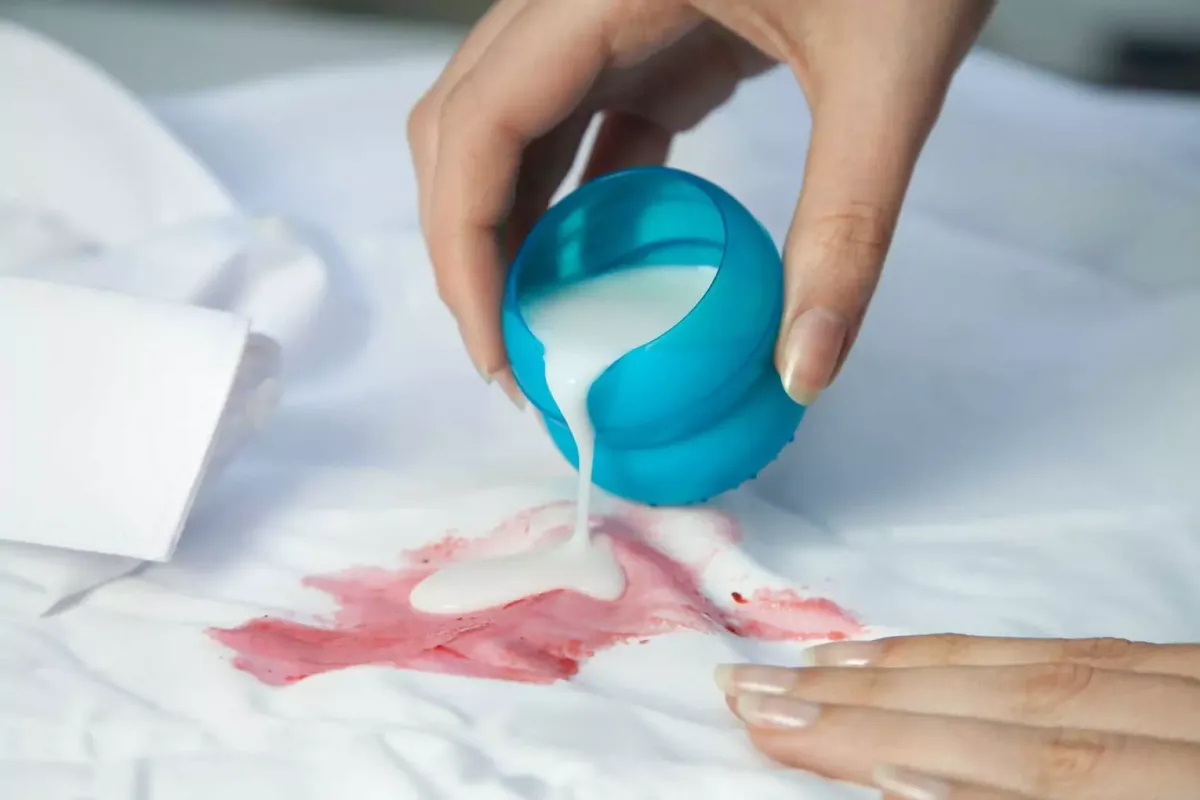
Image source: Bing (Web (fair-use with source credit))
What Never To Do with a Toothpaste Stain
Even with the right intentions, it's easy to make a toothpaste stain worse. These are the mistakes we see most often, and they're all avoidable.
The Hot Water Trap
Hot water sets toothpaste stains. It causes the surfactants to bond with fabric fibers and bakes titanium dioxide pigment into the weave. Always use cold water for rinsing, soaking, and washing toothpaste stains.
Warm water is acceptable for cotton after the stain has been treated, but never start with heat.
Rubbing Instead of Blotting
Rubbing a toothpaste stain grinds the abrasive particles deeper into the fabric and spreads the residue outward. Blotting lifts the stain without pushing it in. Use a clean cloth or paper towel and press gently.
Work from the outside of the stain toward the center to prevent spreading.
Throwing It in the Dryer Too Soon
The dryer is the number one reason toothpaste stains become permanent. If any residue remains after washing, the dryer's heat will set it permanently. Always air dry first.
Inspect the garment in good light. Only machine dry once you're confident the stain is completely gone.
Using Chlorine Bleach on Delicates
Chlorine bleach dissolves silk and wool fibers. It can also yellow certain synthetics. If you need bleaching power, use oxygen bleach instead.
It's far gentler and effective on the compounds found in toothpaste stains.
Mixing Cleaning Agents Blindly
Never mix bleach with vinegar or ammonia. The combination produces toxic chloramine gas. Stick to one cleaning agent at a time.
If you want to switch from one to another, rinse the garment thoroughly in between.
Real-Life Scenarios and How to Handle Them
Let's put this all together with a few situations that come up regularly. Each one shows how the variables change the approach.
Scenario A: Kid Gets Whitening Toothpaste on a Cotton T-Shirt at Bedtime
You discover the stain in the morning. It's dried and the shirt went through the wash and dry yesterday. The stain is bright white from titanium dioxide.
Start by soaking the shirt in cold water with oxygen bleach for one to two hours. Check the stain. If it's fading, repeat the soak.
Once the mark is gone or nearly gone, wash the shirt on a warm cycle with oxygen bleach added to the detergent. Air dry and inspect. This usually takes two to three treatment cycles for a fully set-in whitening stain.
Scenario B: Gel Toothpaste on a Silk Blouse Right Before Work
You've got thirty minutes. The stain is fresh but the fabric is delicate. Silk can't handle vinegar, bleach, or rubbing alcohol.
Rinse the stain immediately with cold water from the back. Apply a drop of mild dish soap and gently work it in with your fingertips. Rinse again.
Blot with a clean white cloth. If a faint mark remains, it's better to wear it as-is and treat it properly at home than to risk damaging the silk with aggressive treatment.
Scenario C: Dried Toothpaste on a Wool Sweater You Just Noticed
The stain has been there for days. Wool is sensitive to heat, agitation, and harsh chemicals.
Soak the stained area in cold water with a few drops of mild dish soap for 30 minutes. Gently press the water through the fabric. Do not wring, twist, or rub.
Rinse with cold water. If the stain persists, take the sweater to a professional dry cleaner and point out the stain. Wool is not worth risking with DIY bleach treatments.
Scenario D: Scrub Uniform with Regular Paste — It Won't Budge
You've tried washing it twice and the mark is still visible. The surfactants in the paste have bonded with the fabric fibers.
Pre-treat with liquid dish soap and let it sit for ten minutes. Then soak in a white vinegar solution (one part vinegar to two parts cold water) for 30 minutes. Wash on the warmest temperature the care label allows.
Add oxygen bleach if the uniform is white. Air dry and check. Repeat if needed.
Hard Water, Humidity, and Other Hidden Factors That Affect Results
Your local water and environment can quietly affect how well stain removal works. Hard water, which contains high levels of calcium and magnesium, can react with surfactants in toothpaste and cleaning agents, reducing their effectiveness. If you have hard water, you may need an extra rinse cycle to fully remove soap and loosened stain particles.
High humidity slows air drying, which means the garment stays damp longer. That's not necessarily a problem for the stain itself, but it can lead to musty odors if the fabric takes more than 24 hours to dry. Use a fan or dry the garment near an open window to speed things up.
Water temperature from your tap also varies by season and region. In winter, cold water from the tap can be significantly colder than in summer. That's actually better for stain removal, but if your hands are too cold to work comfortably, use the coldest water you can tolerate rather than switching to warm.
When to Call a Professional
Sometimes the smartest move is to hand it off to someone with commercial-grade equipment and solvents.
Signs the Stain Is Beyond Home Treatment
If you've gone through three full treatment cycles and the stain is still clearly visible, it's probably set beyond what household products can handle. Other warning signs include the stain changing color (which can indicate a chemical reaction with the fabric) or the fabric becoming thin or discolored from repeated treatment.
When the Garment Is Worth the Dry-Cleaning Bill
For expensive garments like tailored suits, designer pieces, or heirloom items, skip the DIY attempts entirely. Point out the stain to your dry cleaner and tell them what caused it. Professional cleaners have access to solvents that can dissolve titanium dioxide and surfactant residue without damaging delicate fabrics.
The cost of professional cleaning is almost always less than replacing a ruined garment.
Quick-Reference Decision Chart — Your At-a-Glance Guide
Use this chart to match your situation to the right treatment. Start at the top and work down until you find your scenario.
| If Your Situation Is… | Do This |
|---|---|
| Fresh stain, any toothpaste, cotton or polyester | Rinse with cold water, apply dish soap, wash on normal cycle |
| Fresh stain, whitening paste, white fabric | Rinse, soak in oxygen bleach solution, wash with oxygen bleach |
| Fresh stain, any toothpaste, silk or wool | Rinse with cold water, apply mild dish soap, blot gently, air dry |
| Set-in stain, regular paste, cotton or polyester | Pre-treat with dish soap, soak in vinegar solution, wash, air dry |
| Set-in stain, whitening paste, white fabric | Soak in oxygen bleach for 1-2 hours, repeat if needed, wash, air dry |
| Set-in stain, any toothpaste, silk or wool | Soak in cold water with mild dish soap, if stain persists, see a dry cleaner |
| Stain survived the dryer | Soak in oxygen bleach (white fabrics) or vinegar (colors), repeat up to 3 times |
Frequently Asked Questions
Can toothpaste stains become permanent?
Yes, especially if the garment is machine dried before the stain is fully removed. Heat sets the compounds in toothpaste, particularly titanium dioxide in whitening formulas. Always air dry first and confirm the stain is gone before using a dryer.
Does whitening toothpaste stain more than regular toothpaste?
Whitening toothpaste typically causes more stubborn stains because it contains titanium dioxide, a white pigment that binds strongly to fabric fibers. Regular toothpaste stains are usually easier to remove with dish soap and cold water alone.
Can I use bleach on a toothpaste stain?
Oxygen bleach is safe and effective on white cotton and polyester. Chlorine bleach should only be used on white cotton, and never on silk, wool, spandex, or colored fabrics. Always follow the garment's care label.
How long should I soak a toothpaste stain?
Fresh stains need 15 to 30 minutes. Set-in stains benefit from one to two hours. For stubborn whitening paste stains, you may need to soak overnight in an oxygen bleach solution.
Will vinegar damage my clothes?
White vinegar is safe for cotton, polyester, and most synthetic blends when diluted properly. It can weaken silk fibers over time, so avoid using it on silk garments. Always rinse thoroughly after soaking.
What if I already dried the garment with the stain?
You can still try to remove it, but the odds are lower. Soak the garment in oxygen bleach (for white fabrics) or a vinegar solution (for colors) and repeat the treatment cycle up to three times. If the stain persists after three attempts, it's likely permanent.