What Is Cloth Wiring (house Wiring): Beginner-Friendly Guide
If you've ever opened an attic or basement ceiling and noticed wires wrapped in old fabric instead of plastic, you've probably wondered what you're looking at. What is cloth wiring (house wiring) is one of the most common questions homeowners ask when they discover these aging electrical systems hiding behind walls or above joists. The short answer: it's an early form of residential electrical wiring that was standard in American homes from the 1880s through the 1950s, and it carries real safety implications today.
Cloth wiring, sometimes called cloth-insulated or fabric-covered wiring, uses cotton or rayon braid over a rubber compound insulation layer. It was the go-to method before PVC-jacketed cable (what we now call Romex) took over in the 1960s. Understanding what it is, how to spot it, and what to do about it can protect your home and your family.
Let's walk through everything you need to know.
Quick Answer
Cloth wiring is an early residential electrical wiring system used from the 1880s to the 1960s. Each conductor is wrapped in cotton or rayon fabric over rubber insulation. It typically has no ground wire.
The insulation becomes brittle and deteriorates with age, creating a fire hazard. If your home has cloth wiring, have a licensed electrician evaluate it.
What Is Cloth Wiring in a House
Cloth wiring refers to electrical conductors insulated with a layer of woven cotton or rayon fabric, often over a rubber compound base. It was the standard residential wiring method in the United States for roughly 80 years. You'll most often find it in homes built before 1960, though some installations continued into the early 1960s in certain regions.
The system typically runs as two separate single conductors, a hot wire and a neutral wire, rather than the bundled cables we use today. These individual wires are strung through ceramic or porcelain knobs and tubes mounted to the home's framing. The porcelain knobs hold the wires away from wood framing, and the porcelain tubes protect wires where they pass through joists or studs.
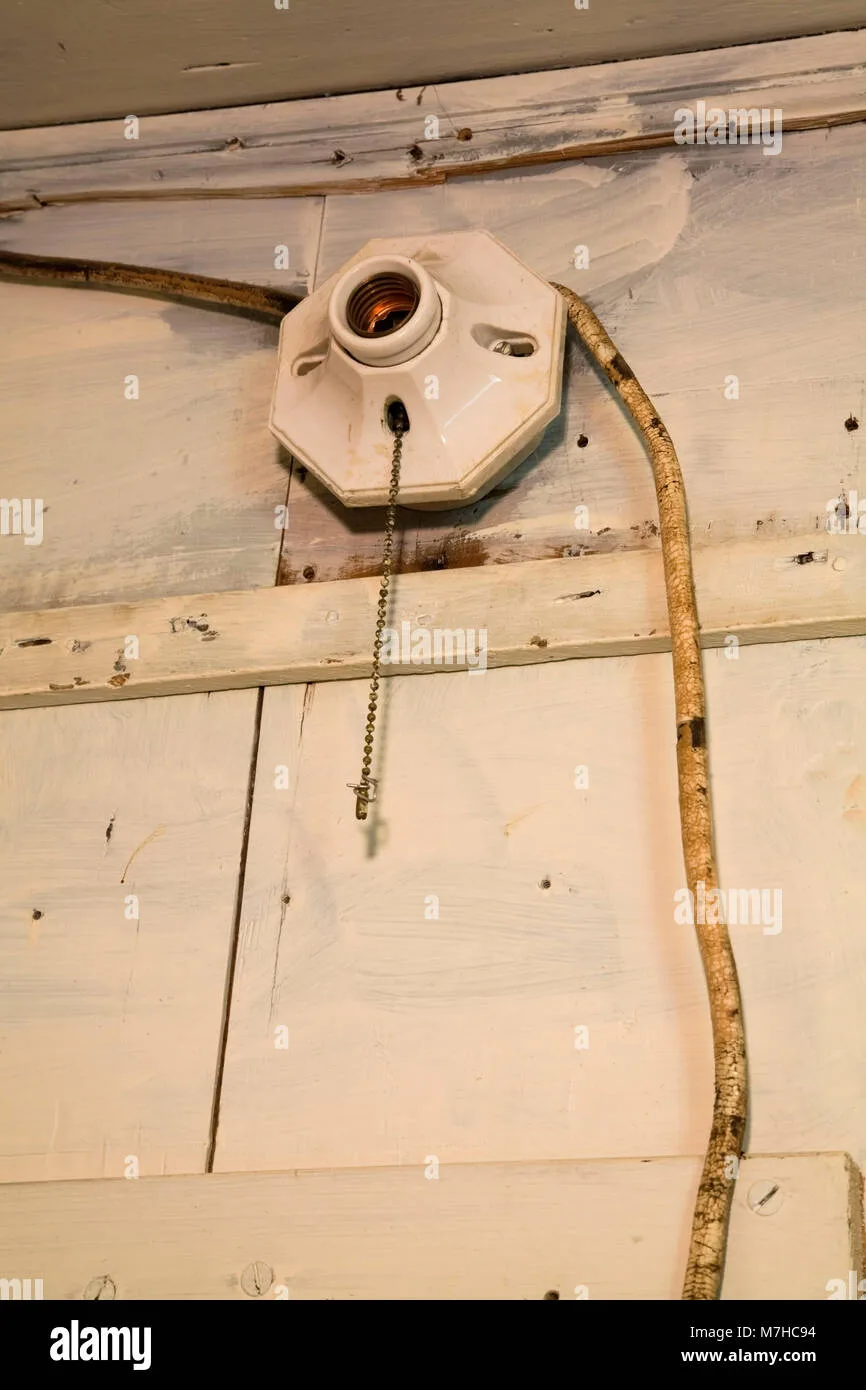
The cloth covering itself was usually black, white, or sometimes red. Black was standard for the hot conductor, white for neutral. The fabric was treated with various compounds to resist moisture and add durability, but none of those treatments were designed to last a century.
There's an important distinction to make here. "Cloth wiring" is often used as a catch-all term, but it actually covers a few different systems:
- Knob-and-tube wiring: The earliest form, using individual wires on porcelain insulators. Most common from the 1880s to the 1940s.
- Early rubber-insulated cable with cloth jacket: A later evolution where hot and neutral wires were bundled together under a single cloth and rubber sheath. More common from the 1930s to 1950s.
- Asbestos-cloth wiring: Some pre-1930s installations used asbestos-impregnated cloth for heat resistance. This adds a separate health concern beyond the electrical risk.
All of these fall under the cloth wiring umbrella, and all share the same core problem: the insulation breaks down over time.
How to Tell If Your Home Has Cloth Wiring
The easiest way to identify cloth wiring is to look at exposed electrical runs in your attic, basement, crawlspace, or anywhere wiring is visible. You're looking for individual wires wrapped in fabric rather than the smooth, plastic-sheathed cables used in modern construction.
Here's what to look for:
- Fabric or cloth texture on the wire insulation. It may look like woven cotton, rayon, or braided fabric. Colors are typically black, white, or a faded brownish tone.
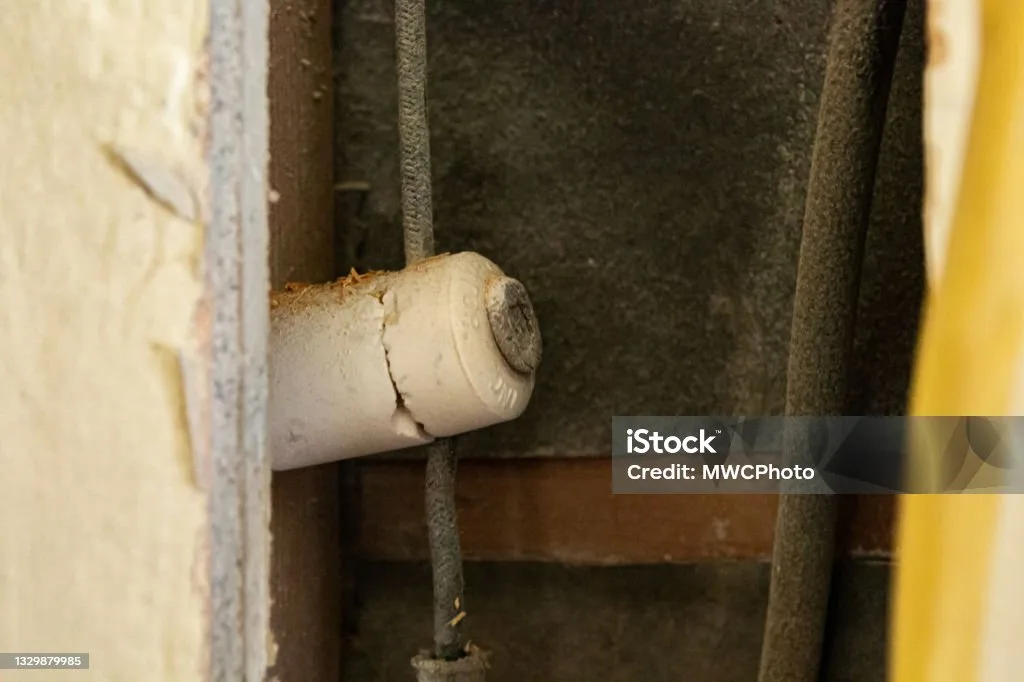
- Porcelain knobs nailed to floor joists or wall studs, with wires wrapped around or threaded through them.
- Porcelain tubes where wires pass through wooden framing members.
- Two separate wires running parallel rather than a single bundled cable.
- No ground wire. Modern Romex has a bare copper ground conductor inside the jacket. Cloth-wired circuits almost never include one.
If your home was built before 1960 and hasn't been rewired, there's a reasonable chance some cloth wiring is still present, even if it's hidden behind finished walls. Previous renovations may have left original wiring in place in areas that weren't updated, like attic runs or basement circuits.
A few things can make identification tricky. Paint, dust, and grime can obscure the cloth texture. Some later cloth-jacketed cables look similar to early Romex at a glance.
And in homes with multiple renovation phases, you might find cloth wiring in one area and modern cable in another.
When in doubt, hire a licensed electrician for a visual inspection. They can confirm what type of wiring you have and assess its condition in about an hour.
Why Cloth Wiring Can Be Dangerous
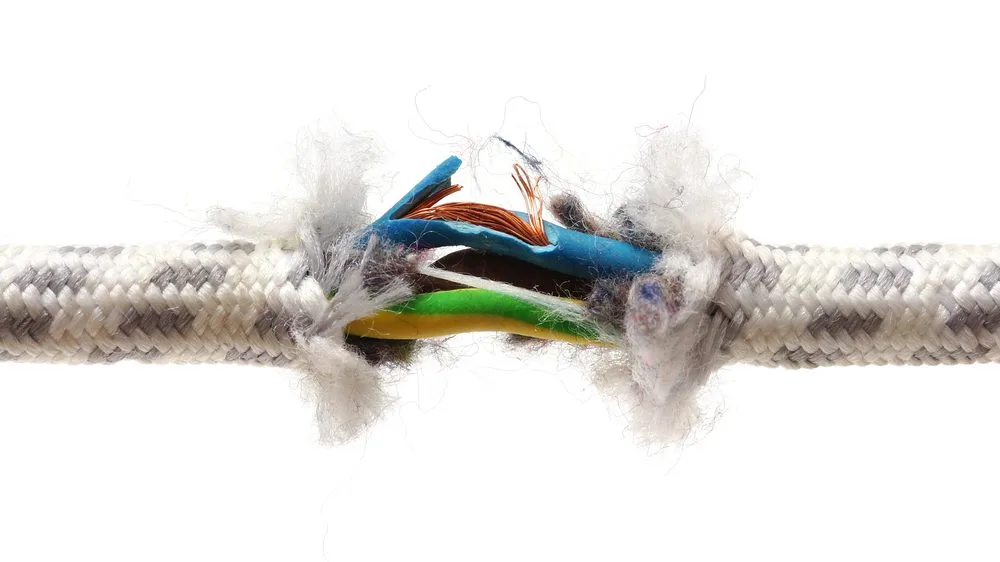
The core issue with cloth wiring is simple: the insulation doesn't last forever. After 60 to 100-plus years, the cloth covering and the rubber underneath become brittle, crack, and flake away. Once the insulation is compromised, exposed conductors can arc, spark, or overheat, especially where wires touch wood framing, metal junction boxes, or each other.
Here are the specific risks:
- Insulation deterioration: The cloth and rubber dry out and crumble over decades. This is the most common failure mode. Once insulation is gone, you have live conductors with nothing between them and combustible material.
- Rodent and pest damage: Mice, squirrels, and insects chew through cloth insulation far more easily than modern PVC jacketing. Attic and crawlspace runs are especially vulnerable.
- Overfused circuits: Many cloth-wired homes originally had 15-amp circuits protected by fuses. Over the years, homeowners frustrated by blown fuses often replaced them with 20-amp or 30-amp fuses. This allows more current than the wiring is rated for, creating overheating risk.
- No ground wire: Without an equipment ground, there's no safe path for fault current. This increases shock hazard and means surge protectors and GFCI outlets can't function as designed (though GFCI protection is still code-compliant as a mitigation, per NEC 406.4(D)(2)).
- Asbestos content: Some cloth wiring manufactured before the 1930s used asbestos fibers in the insulation. Disturbing this material without proper precautions can release airborne fibers, which pose a serious respiratory health risk.
- Improper past modifications: Previous homeowners or unlicensed handymen may have made splices or extensions using electrical tape, wire nuts, or other methods that don't meet code. These are common failure points.
The National Fire Protection Association has identified aging electrical systems as a leading cause of residential electrical fires. Cloth wiring, given its age and material limitations, sits squarely in that risk category.
One critical warning from the NEC: you must never cover existing knob-and-tube wiring with insulation. Section 394.12 of the National Electrical Code prohibits enclosing it in insulation because the system relies on air circulation around the wires to dissipate heat. Burying it in blown-in or batt insulation traps heat and significantly increases fire risk.
Cloth Wiring vs. Modern Romex: What's the Difference
Understanding how cloth wiring compares to today's standard helps explain why replacement is usually the right call. Modern residential wiring uses NM-B cable, commonly known by the brand name Romex. Here's how the two stack up:
| Feature | Cloth Wiring (Pre-1960s) | Modern Romex (NM-B) |
|---|---|---|
| Insulation material | Cotton/rayon cloth over rubber | PVC plastic jacket |
| Conductors | Two separate single wires | Hot, neutral, and ground bundled together |
| Ground wire | Not included | Bare copper ground included |
| Typical amp rating | 15 amps | 15 or 20 amps (depending on wire gauge) |
| Expected lifespan | 60-100+ years (insulation degrades) | 50-70+ years (PVC remains stable) |
| Pest resistance | Low (cloth is easily chewed) | High (PVC resists rodent damage) |
| Heat dissipation | Good (open-air design) | Adequate (but cannot be covered with insulation if K&T) |
| Code compliance | Grandfathered, but restricted | Current NEC standard |
| Cost to install (labor) | N/A (no longer manufactured) | Standard residential wiring cost |
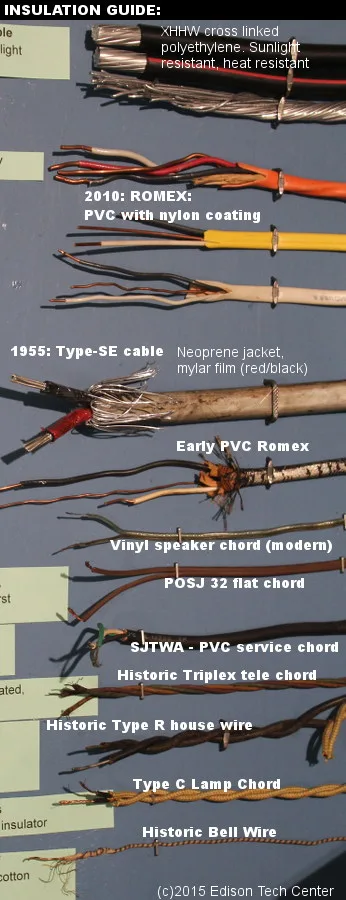
The most important differences are the presence of a ground conductor and the durability of the insulation. Romex's PVC jacket doesn't become brittle the way cloth and rubber do, and the included ground wire provides a critical safety path that cloth-wired circuits simply lack.
That said, it's worth noting that knob-and-tube wiring, when found in good condition and not overloaded, can still carry current safely. The open-air design actually dissipates heat well. The problem is that "in good condition" is increasingly rare after 80 to 100 years, and most cloth-wired circuits have been modified, overloaded, or damaged over the decades.
When Cloth Wiring Is Still Safe — and When It's Not
This is where things get nuanced, and it's the question most homeowners want answered. The honest answer is that cloth wiring exists on a spectrum from "still functional" to "active fire hazard," and only a qualified electrician can tell you where your system falls.
Cloth wiring may still be acceptable if:
- The cloth and rubber insulation is intact, flexible, and not flaking or crumbling.
- The circuit is properly fused or breaker-protected at the correct amperage.
- The wiring has not been modified with improper splices or extensions.
- It has not been covered with insulation (in the case of knob-and-tube).
- It is not located in areas subject to moisture, physical damage, or excessive heat.
Cloth wiring should be replaced if:
- Insulation is visibly cracked, brittle, missing, or falling off.
- You see exposed copper conductors.
- Rodent damage is present.
- The circuit has been overfused (wrong amperage protection).
- Improper splices, tape-only connections, or ungrounded three-prong outlets have been added.
- The wiring is in contact with insulation material.
- Asbestos-containing insulation is suspected.
- You're planning a renovation that will disturb walls or ceilings where the wiring runs.
The practical reality is that most cloth wiring in homes today is at least partially deteriorated. Even if it looks okay in one area, another section hidden behind a wall may be in much worse shape. A licensed electrician can evaluate the full system and give you a clear recommendation.
If replacement isn't immediately feasible, NEC 406.4(D)(2) allows GFCI protection to be added to ungrounded circuits as a safety upgrade. This doesn't fix the insulation problem, but it does add shock protection and is a recognized code-compliant interim measure.
What to Do If Your Home Has Cloth Wiring
Finding cloth wiring in your house doesn't mean you need to panic, but it does mean you need a plan. The right next steps depend on the condition of the wiring, your budget, and whether you're dealing with a few circuits or a whole house.
Step 1: Get a professional evaluation. Hire a licensed electrician to inspect the system. They'll check insulation integrity, look for improper splices, verify fuse or breaker sizing, and identify any code violations. This typically costs $150 to $400 depending on your region and the size of the home.
Step 2: Decide between repair, partial rewire, or full rewire. If only one or two circuits are affected and the rest of the electrical system is modern, a targeted replacement might make sense. If the whole house is wired with cloth, a full rewire is usually the better long-term investment.
Step 3: Add GFCI protection as an interim safety measure. If you can't rewire immediately, NEC 406.4(D)(2) allows GFCI receptacles or breakers on ungrounded circuits. This won't fix deteriorated insulation, but it adds shock protection right away.
Step 4: Get permits and schedule inspections. Most jurisdictions require an electrical permit for rewiring work. Your electrician will usually handle this. A municipal inspector will sign off on the finished work to confirm it meets current code.
One thing you should never do: don't try to repair cloth wiring yourself. Splicing into old cloth-insulated conductors without understanding the system's limitations is how fires start. This is one area where DIY isn't worth the risk.
How Much Does It Cost to Replace Cloth Wiring
Rewiring a house is a significant project, and costs vary widely based on home size, region, accessibility, and whether walls need to be opened and repaired. Here's a general breakdown:
| Project Scope | Typical Cost Range | Timeline |
|---|---|---|
| Single circuit replacement | $500 – $1,500 | 1 – 2 days |
| Partial rewire (half the home) | $4,000 – $10,000 | 3 – 5 days |
| Full home rewire | $8,000 – $20,000+ | 5 – 10 days |
| Rewire with wall repair and painting | $12,000 – $30,000+ | 2 – 4 weeks |
The biggest cost driver is accessibility. If your home has an unfinished basement, attic, and open crawlspaces, the electrician can fish new cable through walls with minimal drywall work. If everything is behind finished plaster walls in a two-story home, expect higher costs for both electrical labor and drywall repair.
A few things that affect the final price:
- Panel upgrade: If you're still running a fuse box, you'll likely need a new circuit breaker panel. That adds $1,500 to $3,500.
- Number of circuits: Modern code requires more circuits than older homes have. Kitchens, bathrooms, and laundry rooms all need dedicated 20-amp circuits.
- Permit fees: These vary by municipality but typically run $100 to $500.
- Asbestos abatement: If asbestos-containing wiring is present, a licensed abatement contractor must handle removal. That can add $2,000 to $10,000 or more.
Get at least three quotes from licensed, insured electricians. Make sure each quote includes permit costs, panel work if needed, and a clear scope of what circuits will be replaced.
Insurance and Cloth Wiring: What Homeowners Need to Know
This is where cloth wiring gets expensive in ways that go beyond rewiring costs. Many insurance carriers are reluctant to cover homes with cloth wiring, and some will decline coverage entirely.
Here's what typically happens:
- Policy denial: Some carriers won't write a new policy on a home with known cloth wiring. If you're buying an older home, this can delay or derail your closing.
- Premium surcharges: Carriers that do offer coverage often charge 10% to 25% more than they would for a home with modern wiring.
- Inspection requirements: The insurer may require an electrical inspection before binding coverage. If the inspector flags the cloth wiring, you'll need to rewire or provide proof of GFCI protection.
- Policy exclusions: Some policies will cover the home but exclude electrical fire claims related to the cloth-wired circuits. Read the fine print carefully.
If you're selling a home with cloth wiring, expect buyers to negotiate. Many will ask for a rewire credit at closing, typically $10,000 to $20,000 depending on local market conditions. Some sellers choose to rewire before listing to avoid the negotiation altogether and attract a larger pool of buyers.
The best move is to call your insurance carrier directly and ask about their specific policy on cloth wiring. Don't wait until renewal time to find out you're not covered.
Can You Sell a Home With Cloth Wiring
Yes, you can sell a home with cloth wiring, but it complicates the transaction. The wiring doesn't have to be replaced before listing, but you'll need to disclose it. Most states require sellers to disclose known material defects, and cloth wiring qualifies.
Here's what to expect during the sale:
- Buyer inspection findings: The buyer's home inspector will almost certainly flag cloth wiring. This triggers negotiations.
- Buyer financing issues: Some mortgage lenders require the electrical system to meet current code before approving the loan. FHA and VA loans can be especially strict.
- Reduced buyer pool: Many buyers walk away when they see cloth wiring on an inspection report. Those who stay will want concessions.
- Disclosure liability: If you knew about the cloth wiring and didn't disclose it, you could face legal action after the sale. Always disclose.
Your options as a seller are straightforward. You can rewire before listing, offer a credit at closing, or price the home lower to account for the buyer's expected rewire cost. Each approach has trade-offs, but transparency protects you legally and builds trust with serious buyers.
Common Mistakes Homeowners Make With Cloth Wiring
Over the years, well-meaning homeowners have made cloth wiring worse with modifications that seemed reasonable at the time. Here are the most frequent errors:
- Overfusing circuits: Replacing a 15-amp fuse with a 20-amp or 30-amp fuse because it keeps blowing. This allows more current than the wiring can safely carry.
- Covering knob-and-tube with insulation: Adding blown-in attic insulation over exposed knob-and-tube wiring traps heat and creates a fire hazard. NEC 394.12 explicitly prohibits this.
- DIY splices: Twisting new wire onto old cloth-insulated conductors and wrapping them in electrical tape. These connections are unreliable and often not in junction boxes.
- Installing three-prong outlets on ungrounded circuits: This gives the appearance of a grounded outlet without actually providing a ground path. It's misleading and potentially dangerous.
- Ignoring the problem: Cloth wiring doesn't improve with age. Putting off evaluation because "it's been fine for 50 years" is how electrical fires happen.
- Hiring unlicensed contractors: Electrical work requires a licensed professional in most jurisdictions. Unlicensed work may not meet code, can void your insurance, and creates liability if something goes wrong.
If any of these sound familiar, schedule an inspection sooner rather than later. The cost of an electrician's visit is trivial compared to the cost of an electrical fire.
When to Call a Licensed Electrician
Call a licensed electrician immediately if you see exposed copper conductors, notice a burning smell near outlets or switches, experience frequent blown fuses or tripped breakers, or discover cloth wiring during any renovation work. These are signs of an active hazard, not a future concern.
Even without obvious symptoms, you should schedule an inspection if your home was built before 1960 and you've never had the electrical system evaluated. An electrician can assess insulation condition, verify proper circuit protection, and identify code violations that might not be visible to you.
Don't wait for a problem to become an emergency. Cloth wiring deterioration is gradual until it isn't.
Frequently Asked Questions
Is cloth wiring illegal?
Cloth wiring isn't illegal, but it doesn't meet current National Electrical Code standards for new installations. Existing systems are generally grandfathered, meaning you don't have to remove them solely because of their age. However, most jurisdictions require upgrades when you renovate or add circuits, and insurance carriers may impose their own requirements.
How long does cloth wiring last?
Cloth wiring was never designed to last more than a few decades. The rubber insulation underneath the cloth becomes brittle within 30 to 50 years. In practice, some installations have functioned for 80 to 100 years, but that doesn't mean they're safe.
Age alone is reason enough to get a professional evaluation.
Can I get insurance with cloth wiring?
Some carriers will insure homes with cloth wiring, but many won't. Those that do often charge higher premiums, require an electrical inspection, or exclude electrical fire coverage on the cloth-wired circuits. Call your carrier directly to find out their specific policy before assuming you're covered.
Should I buy a house with cloth wiring?
You can, but go in with your eyes open. Budget for a full rewire, negotiate a seller credit, or ask the seller to replace the wiring before closing. Make sure your lender will approve the mortgage, since some loan programs require code-compliant electrical systems.
An inspection by a licensed electrician before closing is essential.
Is all old wiring cloth wiring?
No. Homes built from the 1950s through the 1970s may have early rubber-insulated cable, BX armored cable, or even early Romex. Aluminum wiring, common from 1965 to 1975, is a separate issue entirely.
The only way to know what you have is to look at the exposed wiring or hire an electrician to check.