How to Measure Fabric Yardage (2026) — Step-by-Step Guide
Figuring out how to measure fabric yardage trips up almost everyone at some point. You grab a pattern, head to the fabric store, and suddenly you're guessing how much to buy. Get it wrong and you're either stuck mid-project without enough material, or you've spent way too much on fabric that's just going to sit in your stash.
The good news is that measuring fabric yardage follows a straightforward process once you know what variables to account for. In our research, we found that the single biggest factor most people overlook is fabric width. A standard 45-inch bolt gives you significantly less usable material than a 60-inch bolt, and pattern yardage charts are typically calculated for specific widths.
Let's walk through exactly how to get it right every time.
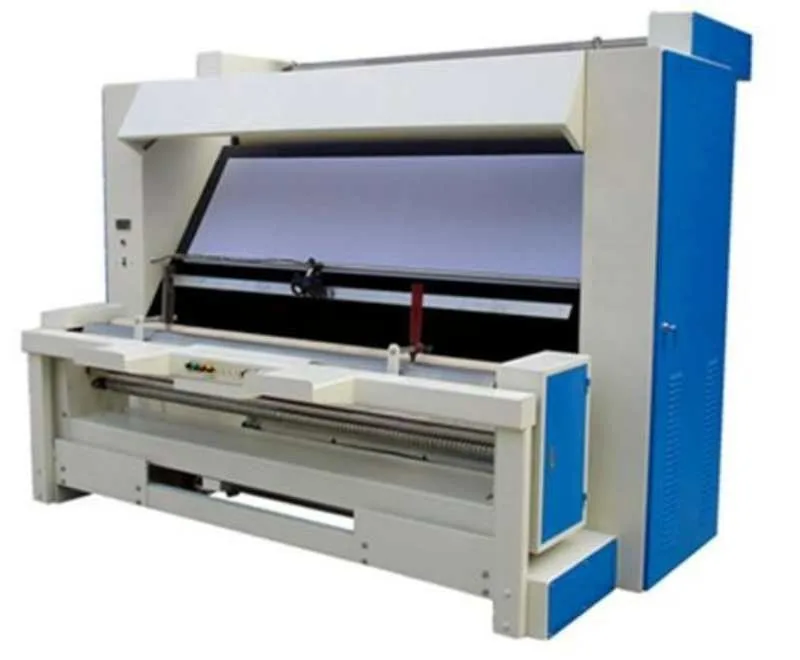
Image source: Bing (Web (fair-use with source credit))
Quick Answer
To measure fabric yardage, check your pattern envelope for the recommended amount based on your fabric width. Account for nap, directional prints, and pattern repeats by adding 25% to 50% extra. Lay out your pattern pieces on the fabric before cutting to confirm everything fits.
Always pre-wash fabric first to account for shrinkage.
The Quick Answer: How Fabric Yardage Actually Works
Fabric yardage is the length of fabric you need for a project, measured in linear yards or meters along the bolt. One yard equals 36 inches. The amount you need depends on three things: what you're making, how wide your fabric is, and whether it has any special characteristics like nap or large pattern repeats.
Pattern envelopes list yardage requirements for different fabric widths, so always start there before doing your own calculations.
What Changes Your Yardage Needs (Fabric Width, Pattern Repeats, Nap, and More)
Not all fabric is created equal when it comes to yardage planning. Several variables can dramatically change how much you need to buy. Missing even one of these can leave you short.
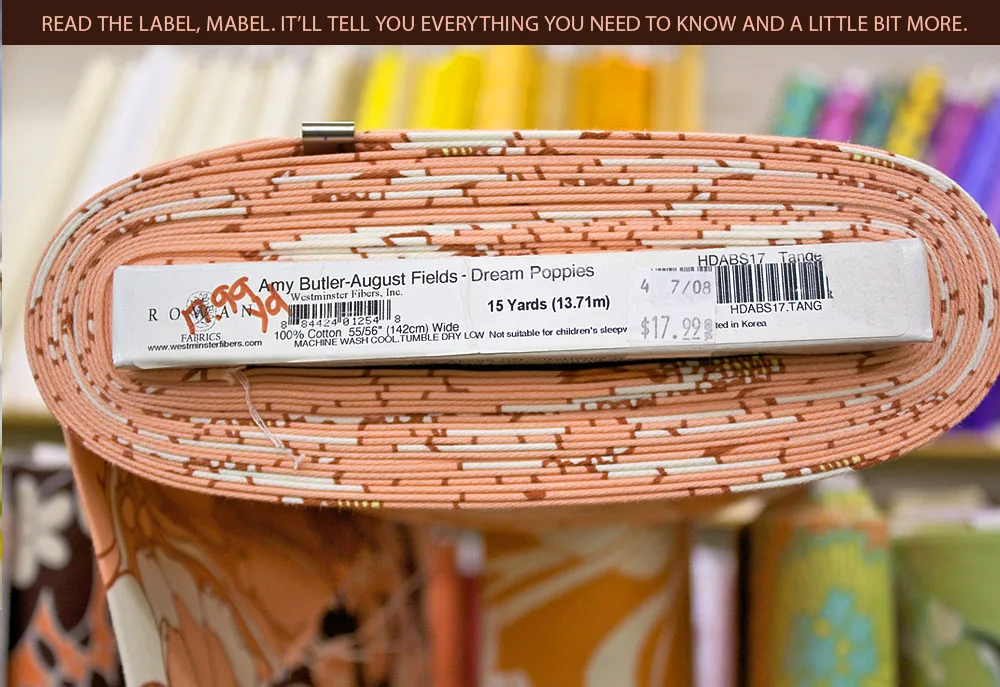
Image source: Bing (Web (fair-use with source credit))
Fabric Width
The width of the bolt is the foundation of every yardage calculation. Common widths you'll encounter:
| Fabric Width | Common Uses | Notes |
|---|---|---|
| 45 inches | Apparel, quilting cotton | Standard for most garment fabrics |
| 54 inches | Apparel, light upholstery | Common for medium-weight fabrics |
| 60 inches | Apparel, home décor | Gives more layout flexibility |
| 72 inches | Upholstery, drapery | Wide enough for large pattern pieces |
If your pattern is written for 45-inch fabric and you buy 60-inch fabric, you'll often need less yardage. The reverse is also true. Always match your fabric width to the correct column on the pattern envelope.
Nap and Directional Prints
Nap refers to the texture or pile on fabric that looks different depending on which direction you hold it. Think corduroy, velvet, or flannel. Directional prints are fabrics where the design only looks right when oriented one way, like a floral that clearly grows upward.
When fabric has nap or a directional print, all your pattern pieces must face the same direction. You can't rotate pieces sideways to save space. This typically adds 25% to 50% more yardage than the pattern suggests for plain fabrics.
Pattern Repeats
If your fabric has a repeating design, you'll need extra yardage to match the pattern across seams. The larger the repeat, the more fabric you waste in the matching process.
- Small repeats (under 2 inches): Add about 10% extra
- Medium repeats (2 to 6 inches): Add about 25% extra
- Large repeats (over 6 inches): Add 50% or more
The pattern envelope usually notes whether a repeat adjustment is needed. If it doesn't, check the fabric yourself by measuring the distance between one repeat and the next.
Shrinkage
Most natural fiber fabrics shrink when washed. Cotton can shrink 3% to 5%, and some fabrics shrink even more. If you skip pre-washing, your finished project may end up smaller than planned after its first trip through the wash.
Pre-wash your fabric the same way you plan to wash the finished project. Then measure and cut from the pre-washed material. This is especially critical for garments and anything that needs to fit precisely.
Our research into fabric care shows that shrinkage is one of the most common reasons finished projects don't turn out as expected, and it's entirely preventable.
Step-by-Step: How to Measure Fabric Yardage for Any Project
Here's the process that works whether you're sewing a dress, making a quilt, or reupholstering a chair.
Step 1: Check Your Pattern Envelope and Fabric Width
Start with the pattern envelope. It lists yardage requirements organized by fabric width and sometimes by size. Find the row that matches your fabric width and the column for your size.
That's your baseline number.
If you're working without a pattern, measure each pattern piece individually. Add up the total length needed, then divide by 36 to convert inches to yards.
Step 2: Account for Nap, Directional Prints, and Pattern Repeats
Go through the checklist:
- Does the fabric have nap? Add 25% to 50%.
- Is the print directional? Add 25% to 50%.
- Is there a pattern repeat? Add based on repeat size (see above).
If your fabric checks multiple boxes, add the percentages together. A napped fabric with a large repeat might need 75% more yardage than the base amount.
Step 3: Lay Out Your Pattern Pieces (or Use a Yardage Chart)
Before you cut anything, lay your pattern pieces out on the fabric. This confirms everything fits and helps you use the fabric efficiently. If you don't have your fabric yet, use a yardage chart or draw a scaled diagram on graph paper.
Image source: Bing (Web (fair-use with source credit))
For garments, place the largest pieces first. Then fit smaller pieces into the gaps. Keep all pieces on the lengthwise grain unless the pattern specifies otherwise.
If you're working with a fabric that has a grainline you need to identify first, our guide on how to find grainline on fabric walks you through it step by step.
Step 4: Add Extra Yardage for Shrinkage and Mistakes
Add at least half a yard extra for shrinkage if you haven't pre-washed. Add another quarter yard if you're working with an unfamiliar fabric or a complicated pattern. It's always better to have a little left over than to come up short.
Step 5: Convert Between Yards and Meters If Needed
If you're shopping outside the US, fabric is sold by the meter. One meter equals approximately 39.37 inches, or about 1.094 yards. To convert yards to meters, multiply by 0.9144.
To convert meters to yards, multiply by 1.094.
For example, if your pattern calls for 3 yards and you're buying fabric in meters, you'd need about 2.75 meters. Always round up to the nearest quarter meter to give yourself a cushion.
How to Calculate Yardage for Specific Projects
Different projects have different yardage considerations. Here's what to keep in mind for the most common ones.
Garments (Dresses, Shirts, Pants)
Garment yardage depends heavily on the size you're making and the fabric width. A simple T-shirt might need 1.5 to 2 yards of 60-inch fabric, while a full-length dress could need 4 to 6 yards of 45-inch fabric. Always check the pattern envelope first.
If you're between sizes, buy for the larger size.
For garments with sleeves, pay attention to whether the pattern lists separate yardage for the main body and the sleeves. Some patterns also specify different amounts for lined versus unlined versions.
Quilts and Quilt Backing
Quilt backing requires enough fabric to extend several inches beyond the quilt top on all sides. Standard quilt backing yardage ranges from 2 to 8 yards depending on the quilt size and fabric width. For quilts wider than 40 inches, you'll typically need to piece the backing from two or three widths of fabric sewn together.
Image source: Bing (Web (fair-use with source credit))
Curtains and Drapery
Curtain yardage depends on the finished width of the window treatment, the fullness ratio, and the length. A standard fullness ratio of 2 to 1 means you need twice the finished width in fabric. For a pair of panels on a 60-inch window with 2 to 1 fullness, you'd need 120 inches of fabric width, plus extra for hems and headers.
Drapery fabric is often sold in 54-inch or 60-inch widths. If your panels are wider than the fabric, you'll need to piece them and account for seam allowances.
Upholstery and Home Décor
Upholstery projects use heavier fabrics, often 54 inches wide. A standard armchair typically needs 5 to 7 yards. A sofa can need 15 to 25 yards depending on the style and size.
Always buy extra for pattern matching and mistakes, especially with expensive upholstery fabric.
If you're working on something like replacing awning or outdoor fabric, the process has its own specifics. Our guide on how to change RV awning fabric covers the unique considerations for outdoor fabric projects.
Yards vs. Meters: What You Need to Know When Shopping
If you're shopping at a US fabric store, you'll see fabric sold by the yard. One yard equals 36 inches. If you're shopping in the UK, Canada, Australia, or most of Europe, fabric is sold by the meter.
One meter equals about 39.37 inches, or roughly 1.094 yards.
This matters more than you might think. If a pattern calls for 3 yards and you buy 3 meters thinking they're the same thing, you'll end up with about 3.28 yards. That extra sounds helpful, but the reverse is also true.
If you need 3 meters and buy 3 yards, you're about 0.28 meters short. That's enough to leave you without fabric for a sleeve or a facing.
Here's a quick conversion reference:
| You Have | You Need | Multiply By |
|---|---|---|
| Yards | Meters | 0.9144 |
| Meters | Yards | 1.094 |
| Yards | Inches | 36 |
| Meters | Inches | 39.37 |
Always round up after converting. If your calculation says you need 2.3 meters, buy 2.5. That small cushion covers measurement errors and shrinkage.
Common Mistakes That Lead to Not Enough (or Too Much) Fabric
Even experienced sewists get caught by these. Here are the most common yardage mistakes and how to avoid them.
Buying fabric before checking the width. The pattern envelope lists yardage for specific widths. If you grab fabric without confirming the width matches the column you're reading from, you could end up with way too much or not nearly enough.
Ignoring nap or directional prints. If all your pattern pieces need to face the same direction, you can't rotate them to fit more efficiently. This is the number one reason people run out of fabric mid-project.
Skipping the pre-wash. Cotton, linen, and rayon can shrink 3% to 5% or more. If you measure and cut from unwashed fabric, your finished project may not fit after its first wash. This is especially critical for garments and anything with precise dimensions.
Forgetting pattern repeats. Large-scale prints require matching at every seam. That matching eats up fabric fast. A fabric with a 12-inch repeat can require 50% more yardage than the same fabric in a solid color.
Not accounting for mistakes. Even with careful cutting, things happen. A slip of the rotary cutter, a misaligned grainline, a pattern piece placed wrong. Adding a quarter to half a yard of extra fabric gives you room to recover without a trip back to the store.
Confusing fat quarters with yardage. A fat quarter is roughly 18 inches by 22 inches. It's not a quarter of a yard in the traditional sense. If a pattern calls for a quarter yard, a fat quarter may or may not give you enough fabric depending on the pattern pieces.
Quick Reference: Yardage Charts by Fabric Width
Pattern companies publish yardage charts on the back of every envelope. These charts list how much fabric you need for each size at different fabric widths. Here's a simplified example of what you'll typically see:
| Project | Size | 45" Fabric | 54" Fabric | 60" Fabric |
|---|---|---|---|---|
| T-shirt | S-M | 1.75 yds | 1.5 yds | 1.5 yds |
| T-shirt | L-XL | 2.25 yds | 2 yds | 1.75 yds |
| Dress (knee length) | S-M | 3.5 yds | 3 yds | 2.75 yds |
| Dress (knee length) | L-XL | 4.25 yds | 3.75 yds | 3.25 yds |
| Pants | S-M | 2.5 yds | 2.25 yds | 2 yds |
| Pants | L-XL | 3.25 yds | 2.75 yds | 2.5 yds |
These numbers are for plain fabrics without nap or repeats. Always adjust upward if your fabric has any of the special characteristics we discussed earlier.
If you're working without a pattern, you can build your own yardage chart. Measure each pattern piece, add up the total length needed, divide by 36, and add 15% to 20% for safety.
Expert Tips for Measuring Fabric Like a Pro
These are the tricks that experienced sewists use to get yardage right every time.
Use a cutting table with grid lines. A gridded cutting table lets you lay out pattern pieces and measure fabric at the same time. You can see exactly how much fabric each piece takes up and adjust your layout before cutting.
Make a toile first. For complex or expensive projects, make a test version in cheap fabric like muslin. This confirms your yardage calculations and lets you adjust the pattern before cutting into your good material.
Keep a fabric journal. Write down how much fabric you bought for each project and how much you actually used. Over time, you'll build a personal reference that makes future yardage estimates much more accurate.
Buy from stores that allow returns. Many fabric stores let you return unused yardage within a certain time frame. If you can return leftovers, you can buy with more confidence knowing you won't be stuck with excess.
Use digital yardage calculators. Several sewing apps and websites let you input your project type, fabric width, and size to get a yardage estimate. These aren't perfect, but they're a useful second check against your own calculations.
Factor in fabric type. Knits and stretch fabrics sometimes require less yardage because pattern pieces can be nested more tightly. Woven fabrics with no give need more precise layouts and sometimes more total yardage.
Frequently Asked Questions
How do I measure fabric without a pattern?
Measure each piece you need, add up the total length in inches, and divide by 36 to get yards. Add 15% to 20% extra for mistakes and shrinkage. If you're making something based on an existing garment, lay that garment flat and measure the key dimensions to estimate yardage.
How much extra fabric should I buy for pattern matching?
For small repeats under 2 inches, add about 10%. For medium repeats of 2 to 6 inches, add 25%. For large repeats over 6 inches, add 50% or more.
The exact amount depends on how many seams you have and how precise the matching needs to be.
Can I use a yardage calculator instead of measuring manually?
Yes, yardage calculators are a useful tool for getting a quick estimate. They work well for standard projects like garments and quilts. For unusual projects or fabrics with special characteristics, manual measurement is more reliable.
What if my fabric is a different width than the pattern specifies?
You'll need to adjust the yardage. Wider fabric generally means you need less yardage because pattern pieces fit more efficiently. Narrower fabric means you need more.
If you can't find a yardage chart for your specific width, lay out your pattern pieces on paper at the correct scale to estimate.
How do I account for fabric shrinkage?
Pre-wash and dry your fabric the same way you'll wash the finished project. Measure and cut from the pre-washed fabric. For cotton and other natural fibers that shrink significantly, add 3% to 5% to your yardage calculation as an extra precaution.
Is it better to buy too much or too little fabric?
Always buy a little too much. Running out of fabric mid-project is far more frustrating and expensive than having leftover fabric. Leftover yardage can go into your stash for future projects, but a half-finished garment with no matching fabric is a problem that's hard to solve.
Final Checklist: Before You Buy Your Fabric
Run through this quick checklist before you head to the fabric store or place an online order. It takes two minutes and saves you from the most common yardage mistakes.
- Check the pattern envelope for yardage at your specific fabric width
- Confirm whether the fabric has nap, a directional print, or a pattern repeat
- Add extra yardage if any of those factors apply
- Pre-wash your fabric before measuring and cutting
- Add a quarter to half a yard as a safety margin
- Convert yards to meters (or vice versa) if shopping internationally
- Round up, never down
If you've worked through each of those steps, you're in great shape. You'll buy the right amount of fabric, your project will come together smoothly, and you won't be making emergency trips to the store mid-sew. That's a win every time.