How to Wash Microfiber Cloths 2026: Beginner-Friendly Guide
Image source: Bing (Web (fair-use with source credit))
If you've ever grabbed a microfiber cloth expecting that satisfying streak-free shine and gotten a smeared, linty mess instead, the problem probably isn't the cloth. It's how it was washed. Learning how to wash microfiber cloths the right way is one of those small habits that makes a massive difference in how well they clean and how long they last.
Microfiber cloths are made from split synthetic fibers, each one thinner than a human hair, and that split structure is exactly what gives them their incredible dust-grabbing and liquid-absorbing power. But that same structure is fragile. One wrong move in the laundry and you've basically turned a premium cleaning tool into a scratchy rag.
The good news is the process is simple once you know the rules.
Quick Answer: The Golden Rules of Washing Microfiber
Wash microfiber cloths in warm water with a mild, liquid detergent that's free of dyes and fragrances. Skip the fabric softener and bleach entirely, because both destroy the fiber's split structure. Dry on low heat or air dry.
Separate cloths by soil level and use a mesh laundry bag for smaller pieces.
That's the short version. But the details matter, especially if you want your cloths to keep performing wash after wash. Let's walk through everything.
What Makes Microfiber Different From Regular Cleaning Cloths
Microfiber isn't just a marketing buzzword. It's a specific type of synthetic textile made from a blend of polyester and polyamide (nylon), and the fibers are "split" during manufacturing into wedge-shaped strands. Each fiber is less than one denier in diameter, which means it's roughly 1/100th the thickness of a human hair.
That split structure is the secret. It creates millions of tiny hooks and channels that physically grab dust, oil, and bacteria rather than just pushing them around like a cotton rag does. A good-quality microfiber cloth can absorb up to eight times its own weight in water, and the static charge it generates naturally attracts dust particles.
Here's where things get tricky for laundry day. Those split fibers are delicate. Heat, harsh chemicals, and even the wrong detergent can fuse the splits back together or coat them in residue.
Once that happens, the cloth loses its absorbency and its ability to pick up fine particles. It still looks like a microfiber cloth, but functionally it's done.
The GSM (grams per square meter) of your cloth also matters. Lighter cloths around 200 GSM are great for glass and electronics. Heavier ones at 350 GSM and above handle general cleaning and automotive work.
Thicker cloths can tolerate slightly more aggressive washing, but the core rules stay the same regardless of weight.
The
The Right Way to Wash Microfiber Cloths: Step by Step
Start by sorting your cloths. Separate lightly used dusting cloths from ones that handled grease, oil, or heavy grime. Washing a greasy automotive cloth with your delicate glass cloths just redistributes the oil, and nobody wants that.
Give each cloth a good shake outdoors to knock loose any dried debris or dust. For heavily soiled cloths, a quick rinse under cold water before they go in the machine makes a real difference.
Image source: Bing (Web (fair-use with source credit))
Use a mesh laundry bag for smaller cloths. It keeps them from getting lost in the drum and reduces friction against other items. Don't overload the machine either.
Microfiber needs room to move so water and detergent can actually reach every fiber.
Pick a gentle or normal cycle with warm water. Add a small amount of liquid detergent, roughly half what you'd use for a regular load. If your cloths smell funky or feel stiff, add half a cup of white vinegar to the rinse cycle.
It breaks down residue without damaging the fibers.
Run the cycle. Once it's done, move straight to drying. Don't let wet microfiber sit in the machine.
That's how mildew starts.
What Water Temperature Should You Use, And Does It Actually Matter?
Yes, it matters more than most people think. Warm water, around 105°F (40°C), is the sweet spot for most microfiber cloths. It's hot enough to dissolve oils and lift dirt but not so hot that it risks deforming the fibers.
For cloths used on heavy grease, like automotive detailing towels, you can go warmer, up to about 200°F (93°C). That upper limit is where polyester fibers start to soften, so treat it as an absolute ceiling, not a target.
Cold water works for a quick refresh on lightly used cloths, but it won't cut through built-up oils or cleaning product residue. Hot water above 200°F is a hard no. It melts the split structure of the fibers and permanently ruins the cloth's absorbency.
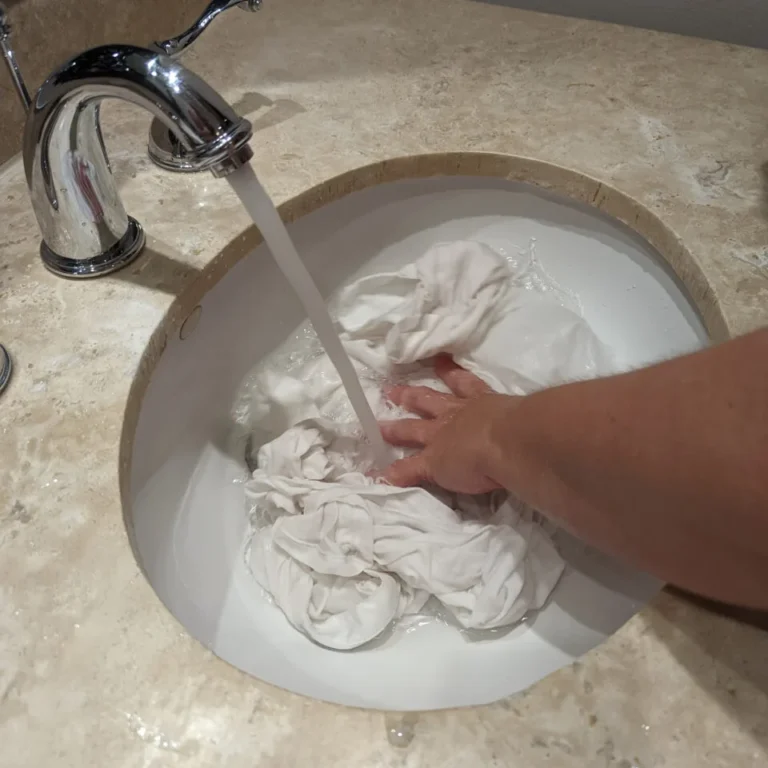
If you're hand washing, stick with lukewarm water and a gentle swish. No wringing or twisting. Just press the water out gently and hang to dry.
Detergent, Vinegar, and What Never to Put in the Wash
Use a mild, liquid detergent that's free of added dyes and fragrances. Powdered detergents can leave gritty residue trapped in the fiber splits, and heavily fragranced liquids coat the fibers with perfumes that interfere with cleaning performance.
A small amount goes a long way. Microfiber doesn't need much soap to get clean. Too much detergent actually leaves a film that reduces absorbency over time.
White vinegar is the one additive that actually helps. Half a cup in the rinse cycle strips away detergent buildup, eliminates odors, and restores some of the cloth's natural static charge. It's especially useful if your cloths have been washed with the wrong detergent in the past.
Now for the critical list of what to never use:
- Fabric softener. This is the number one killer of microfiber. It coats the fibers in a waxy layer that clogs the splits and destroys absorbency permanently.
- Bleach. Chlorine bleach breaks down the polyamide component of microfiber and weakens the fiber structure.
- Dryer sheets. Same problem as fabric softener. They leave a residue that microfiber picks up easily.
- Other lint-producing fabrics. Wash microfiber by itself or with similar synthetics. Cotton towels shed lint that embeds in the microfiber's split structure.
Image source: Bing (Web (fair-use with source credit))
If you accidentally use fabric softener once, don't panic. Wash the cloths again with vinegar in the rinse cycle. You might recover most of the performance.
But repeated exposure is irreversible.
How Often Should You Wash Microfiber Cloths, And When to Deep-Clean
For everyday household cleaning, wash your microfiber cloths after every two to three uses, or whenever they start leaving streaks instead of picking them up. Cloths used in the kitchen or bathroom should be washed more frequently because of bacteria and grease buildup.
Automotive and detailing cloths should be washed after every single use. Wax, polish, and compound residue left in the fibers will scratch the next surface you use them on.
Set a deep-clean schedule for once a month if you use microfiber heavily. Soak the cloths in warm water with a quarter cup of baking soda for 30 minutes, then run them through a normal wash cycle with vinegar in the rinse. This strips out accumulated oils and detergent film that regular washing misses.
If a cloth feels stiff, smells musty after washing, or leaves visible lint on surfaces, it's past due for a deep clean. Or it may be at the end of its usable life.
Drying Microfiber: Air Dry vs. Machine Dry, What's Safely Ok?
Air drying is the safest option. Hang your cloths on a drying rack or clothesline, and they'll be ready in a couple of hours. Microfiber dries fast because of its thin fiber structure, so you won't be waiting long.
Machine drying is fine if you use the lowest heat setting. Tumble dry low for about 20 to 30 minutes. The key word is "low." High heat melts the split fibers and can warp the cloth's shape, especially on thinner, lower-GSM cloths.
Never use dryer sheets in the same load. Even if they don't touch the microfiber directly, the residue circulates through the drum and coats everything.
Skip the iron entirely. Direct heat from an iron will flatten the fiber structure and ruin the cloth's texture.
Image source: Bing (Web (fair-use with source credit))
If you're air drying indoors, lay the cloths flat or hang them over a rod. Don't bunch them up. Trapped moisture leads to mildew, and mildew smells are almost impossible to fully wash out of microfiber once they set in.
Mistakes That Ruin Microfiber Cloths Fast
The biggest mistake is reaching for fabric softener without thinking. It's a reflex for most people. You toss in a capful with every load, and microfiber is no exception.
But that single habit can destroy a cloth's performance in one wash.
Washing with cotton towels or lint-heavy fabrics is another common error. Cotton fibers shed during the cycle and embed themselves deep in the microfiber's split structure. Once that lint is in there, it's nearly impossible to fully remove.
Using too much detergent ranks high on the list. People assume more soap means cleaner cloths. With microfiber, the opposite is true.
Excess detergent leaves a film that coats the fibers and blocks their ability to absorb and grab particles.
Hot water is tempting when cloths are really dirty. But anything above 200°F starts softening polyester fibers permanently. Even water in the 150°F range, common on some washing machine "hot" settings, can cause gradual damage over multiple washes.
Finally, letting wet cloths sit in the machine overnight. Mildew sets in fast, and once that smell is baked into microfiber, regular washing won't fix it.
How to Wash Microfiber Mop Heads vs. Hand Cloths
Mop heads need a slightly different approach because they're larger, heavier when wet, and usually carry more dirt. Shake or rinse them thoroughly before washing. Floor grime and debris can clog your machine's drain if you skip this step.
Use a mesh bag for mop heads, the kind with a zipper. They tumble aggressively in the drum and can get wrapped around the agitator in top-load machines. A bag keeps everything contained.
Warm water and a gentle cycle work best. Mop heads don't need heavy agitation. The water and detergent do the work.
Add vinegar to the rinse cycle if the heads have been used with floor cleaners, as chemical residue builds up fast.
Dry mop heads on low heat or hang them. The attached backing material on many mop heads can warp or separate under high heat, so air drying is the safer bet. Make sure they're fully dry before storing.
Trapped moisture in the backing layer breeds mold.
Hand cloths are simpler. They're lighter, less bulky, and dry faster. The same detergent and temperature rules apply, but you can get away with a shorter wash cycle since they don't hold as much soil.
How to Restore Old, Grimy Microfiber Cloths That Feel Useless
If your cloths feel stiff, smell off, or leave streaks, try a restoration wash before tossing them. Soak the cloths in warm water with a quarter cup of baking soda per gallon for 30 minutes. This loosens embedded oils and detergent buildup.
After soaking, wash them on a normal cycle with half the usual amount of mild detergent. Add one cup of white vinegar to the rinse cycle. The vinegar dissolves residue and helps reopen the split fiber structure.
For cloths with stubborn grease or wax buildup, a second soak in warm water with a small amount of dish soap can help. Dawn or a similar degreasing soap works well. Rinse thoroughly after, then run through a normal wash.
If the cloth still feels rough or leaves lint after restoration, the fibers are likely too far gone. At that point, demote the cloth to a shop rag or garage towel. It's not worth using a degraded microfiber cloth on glass or screens where it'll just cause problems.
Do Microfiber Cloths Release Microplastics? What You Should Know
Yes, they do. Every wash cycle releases synthetic microfibers into the wastewater stream. Research from the University of Plymouth found that a single wash can release over 700,000 microfibers.
These particles are too small for most wastewater treatment plants to fully capture, and they end up in rivers and oceans.
This isn't a reason to stop using microfiber. It's a reason to wash smarter. Fewer, fuller loads release more fibers than necessary.
Washing at lower temperatures and using shorter cycles also reduces shedding.
The type of cloth matters too. Higher-quality microfiber with a tighter weave sheds less than cheap, loosely constructed cloths. Investing in better cloths upfront means less waste and less environmental impact over time.
The Environmental Angle: Laundry Bags and Filtration
Microfiber-catching laundry bags are one of the simplest ways to reduce shedding. Products like the Guppyfriend bag or Cora Ball trap released fibers before they enter the drain. They're not perfect, but studies show they capture a meaningful percentage of shed fibers.
France has taken this further. As of 2025, all new washing machines sold in France must include a built-in microfiber filter. Other EU countries are expected to follow.
This regulation reflects growing recognition that textile microplastic pollution is a serious environmental issue.
At home, you can also reduce impact by washing microfiber less frequently when possible. A cloth used for light dusting doesn't need a full wash after every use. A quick rinse and air dry extends the time between full laundry cycles.
When microfiber cloths reach the end of their life, don't just throw them in the trash if you can avoid it. Some textile recycling programs accept synthetic fabrics. Check with your local waste management authority for options.
Expert Tips From Professional Detailers and Cleaners
Professional detailers wash microfiber after every single use. They keep separate bins for different tasks: one for wax and polish, one for interior cleaning, one for glass. Cross-contamination is the fastest way to scratch a car's paint or leave haze on windows.
Many pros use dedicated microfiber detergent, but the consensus is that any mild, fragrance-free liquid detergent works just as well. The key is consistency and avoiding the common mistakes we've already covered.
Color-coding is standard practice in professional settings. Blue for glass, green for kitchen surfaces, yellow for dusting, red for bathroom or heavy-duty tasks. This prevents using a grease-loaded cloth on a mirror.
Store clean, dry cloths in sealed bags or containers. Open shelves collect dust, and dust on a clean cloth defeats the purpose. A simple zip-top bag or plastic bin with a lid keeps them ready for the next job.
Frequently Asked Questions
Can you wash microfiber cloths with regular laundry?
You can, but only if the other items are also synthetic and lint-free. Washing microfiber with cotton towels or fleece blankets transfers lint into the split fibers and reduces performance. Ideally, wash microfiber by itself or with similar cleaning cloths.
How many times can you wash microfiber cloths before they wear out?
With proper care, quality microfiber cloths last between 200 and 500 wash cycles. Cheaper, lower-GSM cloths may start degrading after 50 to 100 washes. If a cloth feels thin, leaves lint, or no longer absorbs well, it's time to replace it.
Can you use Dawn dish soap to wash microfiber cloths?
Yes, Dawn or a similar degreasing soap works well for a targeted soak on grease-heavy cloths. Use a small amount, rinse thoroughly, then run through a normal wash cycle. Don't use it as your primary detergent though, as it can leave residue over time.
Why do my microfiber cloths smell bad after washing?
Trapped moisture is usually the culprit. If cloths sit wet in the machine or a pile after washing, mildew develops fast. Always dry them promptly.
A vinegar rinse helps eliminate existing odors. If the smell persists after a deep clean, the cloth may need to be retired.
Do you need special detergent for microfiber cloths?
No special detergent is required. Any mild, liquid detergent without added dyes, fragrances, or softeners works fine. The key is using a small amount and avoiding products labeled "ultra" or "heavy duty," which tend to leave more residue.
Is it better to hand wash or machine wash microfiber?
Machine washing on a gentle cycle is more effective at fully cleaning the fibers. Hand washing works for a quick refresh or when you only have one or two cloths. If hand washing, use lukewarm water, a drop of mild soap, and press the water out gently without wringing.
The Decision Checklist: Your Quick-Reference Washing Guide
Here's a fast-reference table for the most common washing scenarios:
| Situation | Water Temp | Cycle | Detergent | Special Notes |
|---|---|---|---|---|
| Light dusting cloths | Warm | Gentle | Half-dose liquid | Vinegar rinse optional |
| Kitchen or bathroom cloths | Warm | Normal | Half-dose liquid | Wash every 2-3 uses |
| Automotive or grease-heavy | Warm to hot (max 200°F) | Normal | Full-dose liquid | Pre-rinse required |
| Mop heads | Warm | Gentle | Half-dose liquid | Use mesh bag |
| Deep-clean / restoration | Warm | Normal | Half-dose + baking soda soak | Vinegar in rinse |
Keep this handy. Print it out and tape it inside your laundry room cabinet if you need to. The rules are simple, but they're easy to forget when you're standing in front of the machine with a pile of dirty cloths.
The bottom line is this: microfiber is an incredible cleaning tool, but it demands a little respect in the laundry room. Skip the softener, keep the heat low, wash it separately, and it'll reward you with hundreds of effective uses. Get it wrong, and you'll wonder why your expensive cloths perform like dollar-store rags.