What Is FR Clothing (flame Resistant Explained) in 2026
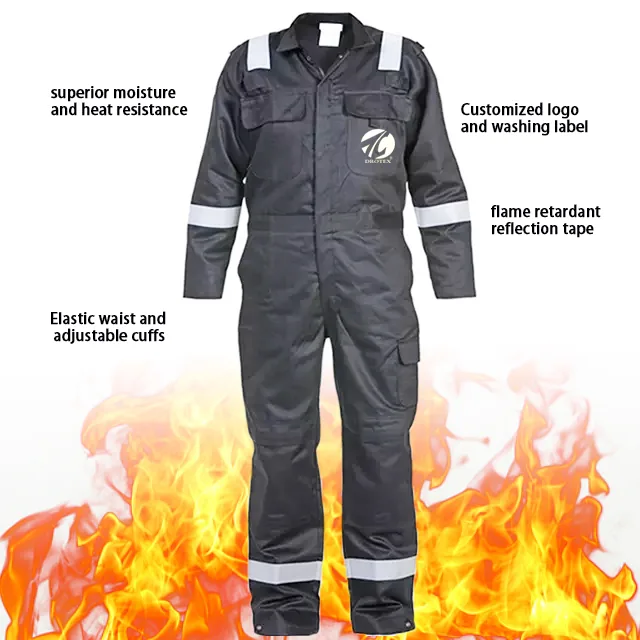
Image source: Bing (Web (fair-use with source credit))
If you work around electrical arcs, open flames, or combustible dust, the clothes on your back aren't just comfort. They're a last line of defense. Understanding what is FR clothing (flame resistant explained) could be the difference between walking away from an incident and suffering life-altering burns.
Flame-resistant clothing is engineered to self-extinguish once the ignition source is removed. It won't melt onto your skin. It won't keep burning.
That behavior is governed by strict standards like NFPA 2112 and NFPA 70E, which set measurable performance thresholds for thermal protection. As of 2026, OSHA requires employers in high-hazard industries to provide compliant PPE, and FR garments are a core part of that obligation.
Let's break down exactly how this gear works, what standards matter, and how to know if you're actually protected.
Quick Answer
Flame-resistant (FR) clothing is personal protective fabric designed to self-extinguish after exposure to fire or electrical arcs. It does not melt, drip, or continue burning once the heat source is removed. FR garments must meet standards like NFPA 2112 for flash fires or NFPA 70E for arc flash hazards.
They are required PPE in oil and gas, electrical utility, welding, and chemical processing industries.
What Is Flame-Resistant Clothing — Really?
Here's the first thing most people get wrong: FR clothing is not fireproof. No fabric is. The term "flame resistant" means the material resists ignition and, if it does catch fire, stops burning on its own once the flame source is gone.
That self-extinguishing behavior is the whole point. In a flash fire or arc flash event, you might have less than three seconds of direct thermal exposure. During those seconds, FR fabric chars instead of melting.
That char layer actually insulates your skin underneath, buying you critical escape time.
Standard workwear fails this test badly. A cotton t-shirt will ignite and keep burning. A polyester blend will melt into your skin, turning a survivable event into a catastrophic injury.
FR clothing is specifically engineered to avoid both outcomes.
The protection is built into the fiber chemistry or applied as a treatment to the fabric. Either way, the garment has to pass rigorous third-party testing before it can carry an FR label. We'll cover those standards in detail shortly.
The Two Types of FR Fabrics: Inherent vs. Treated
Not all FR fabrics are created equal. There are two fundamental categories, and the distinction matters for durability, cost, and long-term protection.
Inherently flame-resistant fabrics have FR properties built into the molecular structure of the fiber itself. The protection can't wash out, wear off, or get laundered away. Common examples include:
- Nomex® (aramid fiber by DuPont)
- Kevlar® (also aramid, often blended for strength)
- Modacrylic fibers (used in many FR knit fabrics)
These fibers are expensive upfront, but they maintain their protective performance for the life of the garment. For workers in high-exposure roles, inherent FR is usually the safer long-term investment.
Treated flame-resistant fabrics start as a base material, usually cotton or a cotton blend, and are chemically treated to achieve FR properties. The most common treatment processes include:
- Proban® (a tetrahydroxymethylphosphonium hydroxide treatment)
- Pyrovatex® (a dimethylol phosphonopropionamide treatment)
Treated fabrics are more affordable and feel closer to regular cotton. The tradeoff is that the chemical treatment can degrade over time, especially with improper laundering. Most quality-treated FR fabrics are rated to maintain protection through 50 to 100 industrial wash cycles, but that number varies by manufacturer and care practices.
Image source: Bing (Web (fair-use with source credit))
Here's a quick comparison:
| Factor | Inherent FR | Treated FR |
|---|---|---|
| Protection lifespan | Life of the garment | Degrades over time/washes |
| Upfront cost | Higher | Lower |
| Feel and comfort | Varies by fiber | Softer, more cotton-like |
| Best for | High-frequency exposure | Moderate or occasional use |
| Laundering sensitivity | Low | Moderate to high |
Neither type is universally "better." The right choice depends on your hazard level, how often you wear the gear, and your employer's PPE program requirements.
How FR Clothing Actually Protects You in a Flash Fire or Arc Flash
FR clothing protects through two mechanisms: resistance to ignition and self-extinguishing behavior. But the type of thermal hazard changes what kind of protection you need.
Flash fires involve a sudden ignition of a fuel source, like a hydrocarbon vapor cloud. The fireball typically lasts three to five seconds but generates intense radiant heat. NFPA 2112 is the governing standard here.
Garments must limit predicted body burn injury to below 50% in standardized testing using a thermal manikin (ASTM F1930). The key metric is Thermal Protective Performance, or TPP, with a minimum rating of 35 required under NFPA 2112.
Arc flashes are electrical discharge events that produce temperatures hotter than the surface of the sun, up to 35,000°F in milliseconds. The hazard here isn't sustained fire. It's the intense thermal energy released in a burst.
NFPA 70E governs arc flash PPE. The critical metric is Arc Thermal Performance Value, or ATPV, measured in calories per square centimeter (cal/cm²). A garment rated at 8 cal/cm² means it will protect against incident energy up to that level before the wearer sustains a second-degree burn.
Some garments carry dual ratings for both flash fire and arc flash protection. These are labeled as arc-rated (AR) and must meet ASTM F1506 in addition to NFPA 2112.
Image source: Bing (Web (Web (fair-use with source credit)))
The layering system matters too. Wearing an FR base layer under an FR outer layer can increase your overall protection significantly. But wearing a synthetic base layer, like a polyester undershirt, underneath FR outerwear defeats the purpose entirely.
That synthetic layer can melt and cause severe burns even if the outer garment performs perfectly.
Key Standards That Define Real FR Protection (NFPA, ASTM, OSHA)
FR clothing isn't a marketing claim. It's a regulated performance category backed by specific test methods and standards. Here are the ones that actually matter.
NFPA 2112 is the Standard on Flame-Resistant Clothing for Protection of Industrial Personnel Against Short-Duration Thermal Exposures from Flash Fires. It sets the minimum performance requirements for fabrics and garments used in flash fire environments. Every garment must be tested per ASTM F1930 using a instrumented manikin to measure predicted body burn percentage.
NFPA 70E is the Standard for Electrical Safety in the Workplace. It defines Hazard Risk Categories (HRC 0 through 4) based on the level of incident energy a worker might face. Each HRC level corresponds to a minimum ATPV rating for arc-rated PPE.
For example, HRC 2 requires a minimum ATPV of 8 cal/cm², while HRC 4 requires at least 40 cal/cm².
ASTM F1506 is the Standard Performance Specification for Flame Resistant and Electric Arc Rated Textile Materials. It covers the baseline fabric requirements, including flame resistance, arc rating, and garment construction details like thread and hardware.
OSHA 29 CFR 1910.269 specifically addresses the electric power generation, transmission, and distribution industry. It requires employers to assess arc flash hazards and provide appropriate PPE, including arc-rated clothing, to affected employees.
ASTM F1930 is the test method itself, using a thermal manikin exposed to a controlled flash fire simulation. It's the gold standard for measuring how much body burn a garment allows under flash fire conditions.
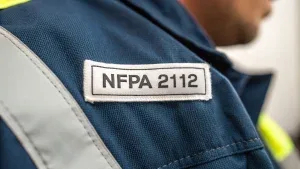
Image source: Bing (Web (fair-use with source credit))
When you're evaluating any FR garment, check the label for compliance markings. A legitimate FR garment will list the applicable standard (NFPA 2112, ASTM F1506), the ATPV or HRC rating, and the manufacturer's certification. If that information isn't on the tag, the garment isn't certified, no matter what the seller claims.
NFPA standards are available through the National Fire Protection Association.
Who Needs FR Clothing — And Why Your Industry Might Require It
FR clothing isn't optional in several industries. It's a regulatory requirement driven by the specific thermal hazards workers face every day.
Oil and gas is the most common sector. Workers on drilling rigs, refineries, and petrochemical plants face flash fire risks from hydrocarbon vapors. OSHA and NFPA 2112 compliance is standard across the industry.
Most major operators mandate FR uniforms for anyone on a facility site.
Electrical utilities deal with arc flash as the primary hazard. Linemen, substation technicians, and maintenance crews working on energized equipment above 50 volts need arc-rated clothing per NFPA 70E. The required ATPV rating depends on the incident energy analysis for each task.
Welding and metalworking involve molten metal splash and sparks. While leather aprons and jackets are common for close-range work, FR base layers protect against secondary ignition from stray sparks that land on clothing.
Chemical processing plants handle volatile substances that can ignite without warning. FR clothing is part of a broader PPE program that may include flash suits for extreme scenarios.
Mining, military, and firefighting also require FR or flame-resistant gear, though the specific standards and garment types vary. Structural firefighters wear turnout gear built to NFPA 1971, which is a different standard from industrial FR but shares the same core principle: self-extinguishing protection.
If your employer requires FR clothing, they're obligated to provide it at no cost under OSHA's PPE standards (29 CFR 1910.132). They're also required to train you on when and how to wear it properly.
Common Misconceptions That Put Workers at Risk
Misunderstanding FR clothing is almost as dangerous as not wearing it. Here are the most frequent mistakes we see.
"FR means fireproof." It doesn't. FR clothing can and will burn under sustained flame exposure. The key difference is that it self-extinguishes when the ignition source is removed.
Prolonged exposure will destroy any FR garment.
"Any heavy cotton is good enough." Untreated cotton ignites easily and continues burning. It offers no meaningful thermal protection. Some people confuse "tightly woven cotton" with FR cotton.
They're not the same thing.
"I only work near hazards occasionally, so I don't need FR." Flash fires and arc flashes are unpredictable. Workers who think they're "far enough away" are often inside the hazard zone. NFPA 70E requires a formal risk assessment to determine who needs PPE, not a gut feeling.
"My FR shirt is five years old but looks fine, so it's still good." Visual inspection alone isn't enough. Treated FR fabrics lose effectiveness over time. Inherent FR lasts longer but still degrades with wear, UV exposure, and repeated laundering.
Garments should be inspected on a schedule and retired per manufacturer guidelines.
"I can wear whatever I want under my FR outer layer." This is one of the most dangerous assumptions. A polyester or nylon base layer will melt underneath otherwise-perfect FR outerwear. That molten synthetic causes severe burns independent of the FR garment's performance.
Only FR-rated or natural fiber underlayers should be worn.
What Happens If You Wear the Wrong Clothing Around Thermal Hazards
The consequences of wearing non-FR clothing in a thermal event are severe and well-documented.
In a flash fire, untreated cotton or synthetic blends ignite within one to two seconds. The fabric continues burning after the fireball passes, dramatically increasing total body burn percentage. Per ASTM F1930 testing data, non-FR workwear typically results in predicted body burn injuries exceeding 50%, which is the threshold NFPA 2112 uses as the failure point for certified garments.
In an arc flash, the thermal energy can exceed 10 cal/cm² in a fraction of a second. Non-FR clothing at that exposure level doesn't just burn. It can vaporize or explode away from the body, leaving skin directly exposed to radiant heat.
Synthetic fabrics like polyester melt at approximately 480°F and can adhere to skin, converting a second-degree burn scenario into a third-degree injury.
The data from NIOSH investigations consistently shows that the severity of burn injuries in industrial incidents correlates strongly with the type of clothing worn. Workers in proper FR gear consistently sustain less severe injuries and have higher survival rates compared to those in standard workwear.
Beyond the physical harm, there are legal consequences. If an employer provides non-compliant PPE or fails to conduct a hazard assessment, OSHA citations and significant fines follow. Workers who voluntarily remove or bypass required FR clothing may face disciplinary action and lose workers' compensation protections.
How to Choose the Right FR Garment for Your Job Hazard
Selecting FR clothing starts with understanding your specific hazard. Not every FR garment protects against every threat.
Step 1: Identify the hazard type. Is your primary risk a flash fire or an arc flash? These require different test standards and ratings. Flash fire protection falls under NFPA 2112.
Arc flash protection falls under NFPA 70E and ASTM F1506.
Step 2: Determine the required protection level. For arc flash, your employer should have completed an incident energy analysis. That analysis assigns a Hazard Risk Category (HRC) or a specific cal/cm² value. Your garment's ATPV rating must meet or exceed that value.
For flash fire, NFPA 2112 compliance is the baseline requirement.
Step 3: Choose the fabric type. Inherent FR is better for high-frequency exposure and longer garment life. Treated FR works for moderate use and tighter budgets. Consider comfort and climate too.
Workers in hot environments need breathable fabrics with good moisture management, or compliance drops because people won't wear uncomfortable gear.
Step 4: Verify the label. Every legitimate FR garment carries a permanent label listing the applicable standard, the manufacturer, the ATPV or HRC rating, and care instructions. If the label is missing or incomplete, don't trust the garment.
Step 5: Ensure proper fit. FR clothing that's too loose can snag on equipment. Too tight and it restricts movement and may not provide adequate coverage. Most manufacturers offer sizing guides specific to their garments.
Layering is another consideration. A single FR garment rated at 8 cal/cm² might not be enough for a 12 cal/cm² hazard. But layering two FR garments can increase the combined ATPV.
Per NFPA 70E, the total system rating, not just the outer layer, determines your protection level.
Arc Rating vs. Flash Fire Rating — Knowing the Difference
These two ratings address completely different hazards, and confusing them can leave you unprotected.
Arc rating (ATPV or EBT) measures how much thermal energy a fabric can block before the wearer sustains a second-degree burn. It's expressed in cal/cm². A garment rated at 12 cal/cm² will protect against arc flash events up to that energy level.
The rating is determined through ASTM F1506 testing using a controlled arc exposure.
Flash fire rating measures how well a garment limits body burn during a short-duration fire exposure. The key metric is predicted body burn percentage from ASTM F1930 manikin testing. NFPA 2112 requires the garment to keep predicted burn below 50% of the body.
A garment can be rated for one, the other, or both. Dual-rated garments exist and are common in industries where workers face both hazards, like petrochemical facilities with electrical infrastructure.
Here's the critical point: a high arc rating does not automatically mean good flash fire protection, and vice versa. The test methods are different. The heat sources are different.
The failure modes are different. Always verify that the garment is rated for the specific hazard you face.
| Rating Type | Hazard | Governing Standard | Key Metric |
|---|---|---|---|
| ATPV / EBT | Arc flash | NFPA 70E, ASTM F1506 | cal/cm² |
| Flash fire | Flash fire | NFPA 2112, ASTM F1930 | Predicted body burn % |
| Dual-rated | Both | NFPA 2112 + NFPA 70E | Both metrics |
If your job task involves both hazards, insist on dual-rated garments. It's the only way to be fully covered.
How Care and Laundering Affect FR Performance Over Time
FR clothing only protects you if it's properly maintained. Poor laundering practices are one of the most common reasons treated FR garments lose their protective qualities.
For treated FR fabrics, household laundry detergents with bleach or hydrogen peroxide can degrade the flame-resistant treatment. Fabric softeners and starches coat the fibers and interfere with the FR chemistry. Per most manufacturer guidelines, treated FR garments should be washed in warm water (not hot) with a heavy-duty liquid detergent.
Avoid chlorine bleach entirely.
Inherent FR fabrics are more forgiving but still require care. Nomex and similar fibers can handle higher wash temperatures, but excessive heat and harsh chemicals still shorten garment life. Follow the manufacturer's care label every time.
Industrial laundering services are the preferred option for most workplaces. These facilities use processes specifically designed for PPE, with controlled water temperatures, appropriate detergents, and inspection protocols. If your employer provides FR clothing, they should also provide or arrange proper laundering.
What to avoid:
- Chlorine bleach (destroys FR treatments)
- Fabric softeners (coat fibers and reduce effectiveness)
- Home dryers on high heat (can shrink or damage fabric)
- Stain removers with oxidizing agents
Inspect your garments after every wash. Look for thinning fabric, frayed seams, holes, or discoloration. Any of these can compromise the garment's protective integrity.
When to Retire FR Clothing — Signs It's No Longer Safe
FR clothing doesn't last forever. Even inherent FR fabrics degrade with wear, UV exposure, and repeated laundering. Here's when to pull a garment out of service.
Visible damage is the most obvious sign. Holes, tears, frayed cuffs, broken zippers, or melted areas all compromise protection. A small hole in an FR shirt might seem minor, but it creates a direct path for thermal energy to reach your skin.
Thinning fabric is harder to spot but equally dangerous. Areas that see the most wear, like elbows, knees, and seat, thin out over time. Hold the fabric up to a light.
If you can see through it, it's done.
Failed closures matter more than people think. Buttons, zippers, and snaps hold the garment closed during a thermal event. If a zipper sticks or a button is missing, the garment can open up and expose skin.
Contamination from chemicals, grease, or flammable substances can make FR clothing itself a fuel source. If a garment is heavily contaminated and can't be properly cleaned, retire it.
Age and wash count are factors too. Treated FR garments have a rated wash life, typically 50 to 100 cycles depending on the treatment and fabric. Inherent FR lasts longer but should still be retired when wear becomes visible.
Most manufacturers provide retirement guidelines in their product documentation.
FR Clothing vs. Regular Workwear — Why Substitutes Don't Work
Regular workwear and FR clothing look similar. That's where the similarity ends.
Standard cotton work shirts, denim jeans, and polyester uniforms offer zero meaningful thermal protection. Cotton ignites at approximately 480°F and continues burning after the flame source is removed. Polyester melts at a similar temperature and adheres to skin, dramatically worsening burn injuries.
FR clothing is tested and certified to perform under specific thermal hazards. Regular workwear has no such testing. There's no standard, no rating, no verification.
Some workers try to bridge the gap with fire-retardant sprays or aftermarket treatments. These products are not recognized by any major safety standard. They haven't been tested per ASTM F1930 or ASTM F1506.
They provide a false sense of security that can be deadly.
The only acceptable substitute for FR clothing is other FR clothing rated for the same or higher hazard level. There are no shortcuts.
Real-World Consequences: What Happens When FR Gear Fails
The NIOSH Fire Fighter Fatality Investigation and Prevention Program has documented numerous cases where clothing failure contributed to serious injuries and deaths.
In industrial settings, investigations consistently show that workers wearing non-FR clothing sustain significantly higher total body burn percentages than those in proper FR gear. A worker in a standard cotton coverall exposed to a three-second flash fire may sustain 40 to 60 percent body burns. The same worker in a NFPA 2112 compliant garment might sustain burns under 20 percent.
Arc flash incidents tell a similar story. Workers without arc-rated clothing exposed to even moderate energy levels (8 to 12 cal/cm²) frequently require skin grafting and extended hospitalization. Workers in properly rated AR clothing often walk away with minor or no injuries.
The financial impact is significant too. OSHA penalties for PPE violations can exceed $16,000 per serious violation as of 2026. Willful violations carry penalties over $160,000.
Workers' compensation claims for burn injuries routinely reach six and seven figures when long-term care is factored in.
Expert Tips for Staying Compliant and Safe on the Job
A few practical habits can make the difference between real protection and a false sense of security.
Always wear FR base layers. Your undershirt matters as much as your outer layer. A single synthetic undershirt can melt and cause severe burns even under perfect FR outerwear. Use only FR-rated or 100% natural fiber underlayers.
Inspect before every shift. Take 30 seconds to check your garment for damage, missing closures, or contamination. Make it a habit, like checking your hard hat.
Follow laundering instructions exactly. If the label says no bleach, don't use bleach. If it says industrial wash only, don't throw it in your home washing machine.
Know your hazard level. Ask your employer for the written hazard assessment. Understand what HRC level or cal/cm² rating your tasks require. Don't guess.
Replace damaged gear immediately. Don't wait for a new order to come in. A damaged FR garment is not better than no FR garment. Report it and get a replacement.
Layer strategically. Two FR garments layered together provide more protection than either one alone. This is especially useful for workers facing variable hazard levels throughout the day.
OSHA's PPE standards are available through the U.S. Department of Labor.
Frequently Asked Questions
Is FR clothing the same as fireproof clothing?
No. FR clothing resists ignition and self-extinguishes when the flame source is removed. It is not fireproof.
Sustained flame exposure will eventually destroy any FR garment. The key protection is self-extinguishing behavior, not total fire immunity.
Can I wash FR clothing at home?
You can, but you need to follow the care label exactly. Use warm water, a heavy-duty liquid detergent, and avoid bleach and fabric softeners. Industrial laundering is preferred because it uses processes specifically designed for PPE and includes inspection protocols.
How long does FR clothing last?
It depends on the fabric type and care. Treated FR garments are typically rated for 50 to 100 industrial wash cycles. Inherent FR fabrics last longer but should still be retired when visible wear, thinning, or damage appears.
Always follow the manufacturer's retirement guidelines.
Do I need FR clothing if I only work near hazards occasionally?
Yes, if your employer's hazard assessment identifies you as being at risk. Flash fires and arc flashes are unpredictable. NFPA 70E requires PPE for anyone who could be exposed, not just those who work in the hazard zone daily.
What happens if I wear a polyester undershirt under my FR outer layer?
The polyester can melt and cause severe burns even if the FR outer layer performs correctly. Synthetic underlayers are one of the most common and dangerous mistakes. Only wear FR-rated or 100% natural fiber base layers under your FR garments.
What does ATPV mean on an FR garment label?
ATPV stands for Arc Thermal Performance Value. It measures how much thermal energy the fabric can block before the wearer sustains a second-degree burn, expressed in cal/cm². A garment rated at 8 cal/cm² protects against arc flash events up to that energy level.
Your garment's ATPV must meet or exceed the incident energy level identified in your workplace hazard assessment.